
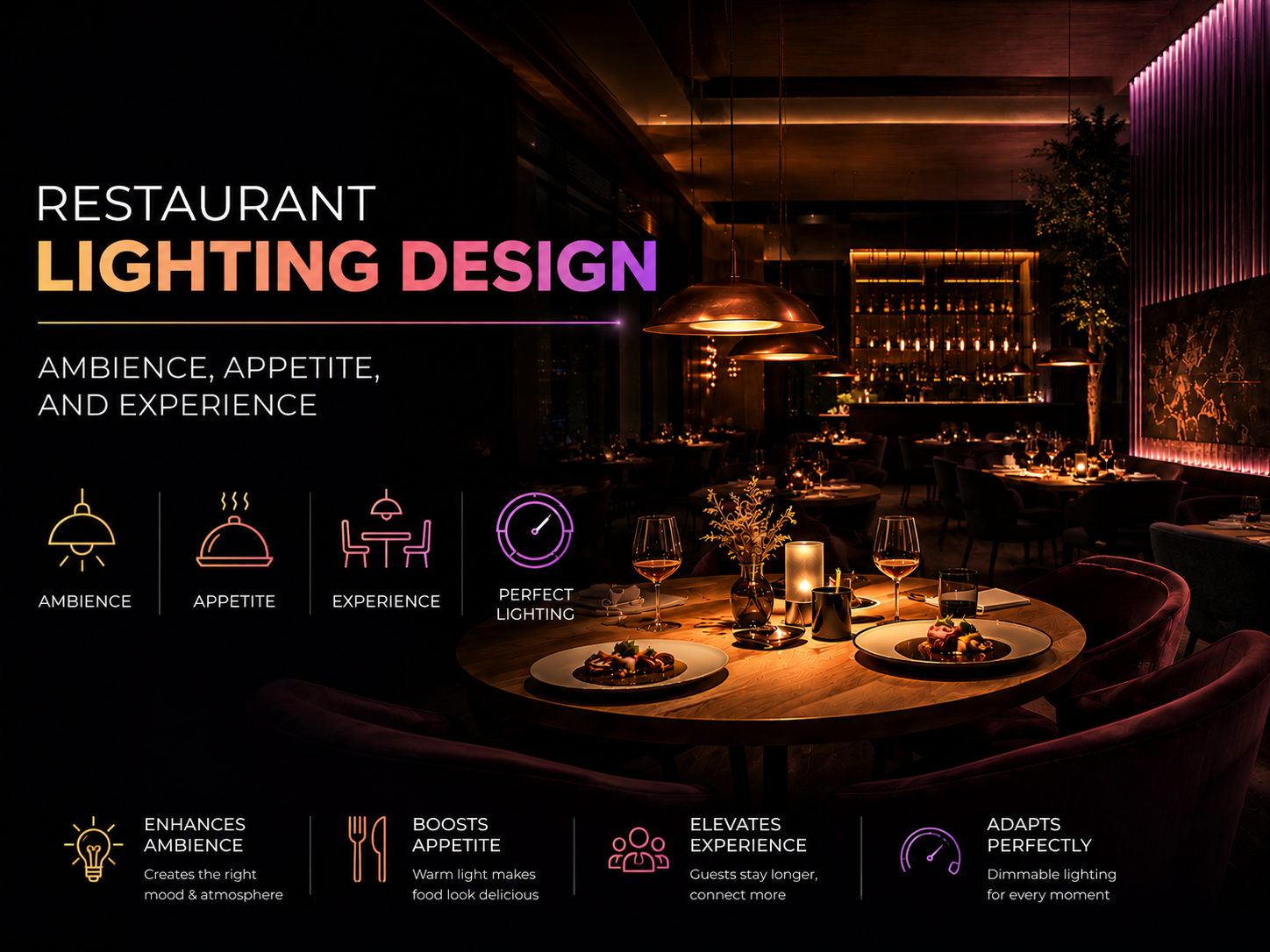
Restaurant Lighting Design: Ambience, Appetite, and Experience
Restaurant lighting is perhaps the most emotionally consequential application in commercial lighting design. The right light makes food look delicious, skin tones flattering, and conversations feel intimate. The wrong light does the opposite — and no amount of good food fully compensates.
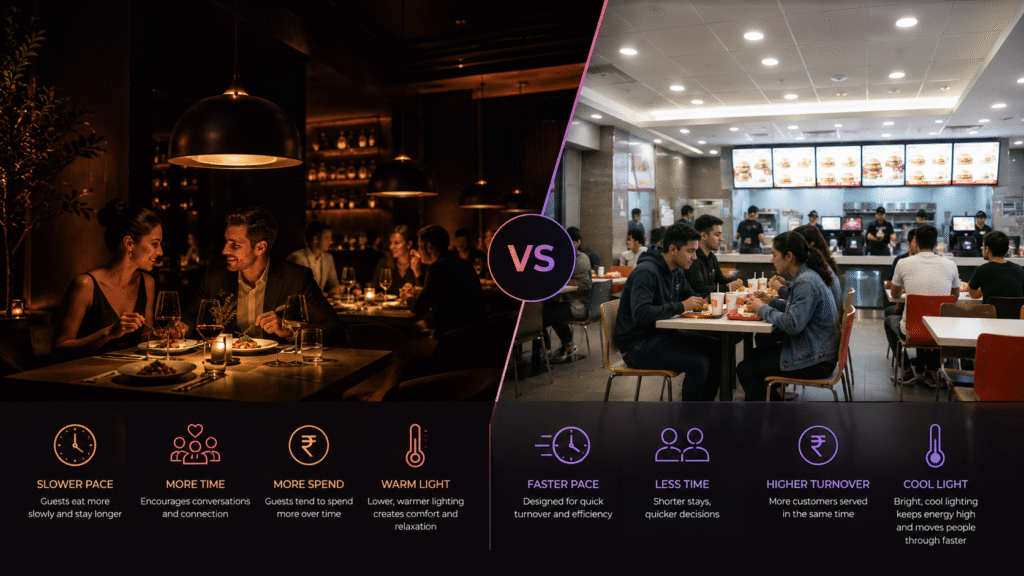
Lighting and Appetite: What the Research Shows
Environmental psychology research confirms that people eat more slowly and spend more time (and money) in restaurants with lower, warmer lighting compared to brighter, cooler environments. Fast food operators deliberately use bright, cool light to increase table turnover. Fine dining operators use warm, dim light to encourage lingering. Designing lighting in alignment with the business model is the starting point for every restaurant project.
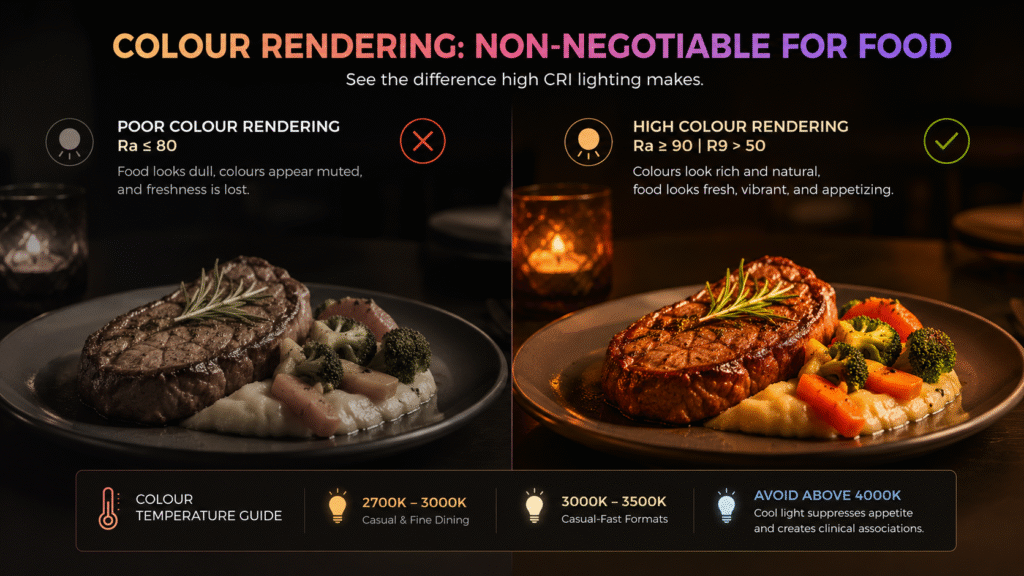
Colour Rendering: Non-Negotiable for Food
High colour rendering is essential in food service. Ra 90+ minimum, with R9 (deep red rendering) above 50 — this ensures meats look rich, produce looks fresh, and sauces look vibrant rather than muddy. The single biggest lighting mistake in restaurants is using standard LED downlights with Ra 80 or lower. Under poor colour rendering, food simply does not look appetising.
Colour temperature: 2700–3000K for casual and fine dining; 3000–3500K for casual-fast formats. Avoid anything above 4000K in any restaurant context — cool light suppresses appetite and creates clinical associations.
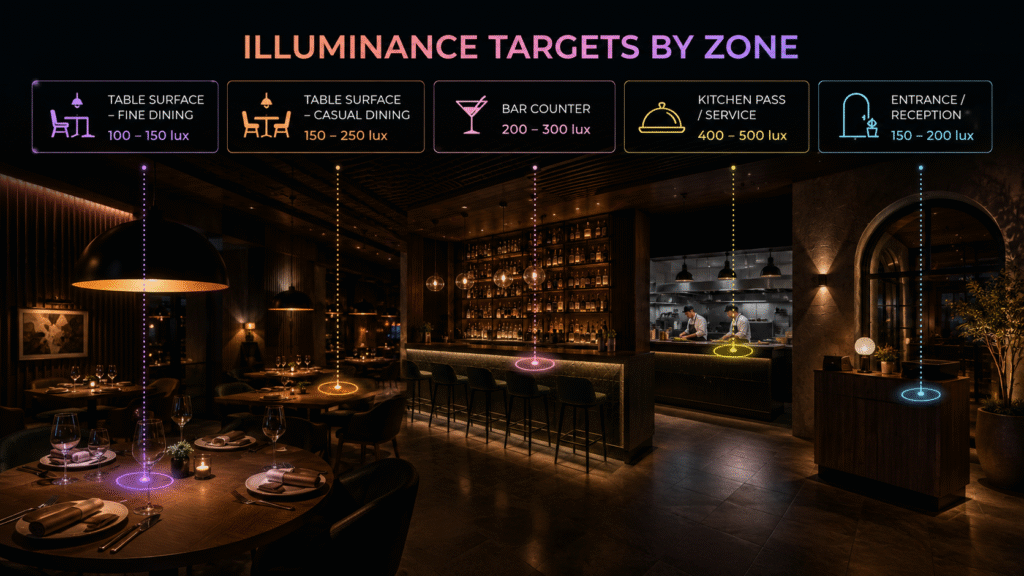
Illuminance Targets by Zone
| Zone | Target (lux) |
|---|---|
| Table surface — fine dining | 100–150 |
| Table surface — casual dining | 150–250 |
| Bar counter | 200–300 |
| Kitchen pass / service | 400–500 |
| Entrance / reception | 150–200 |
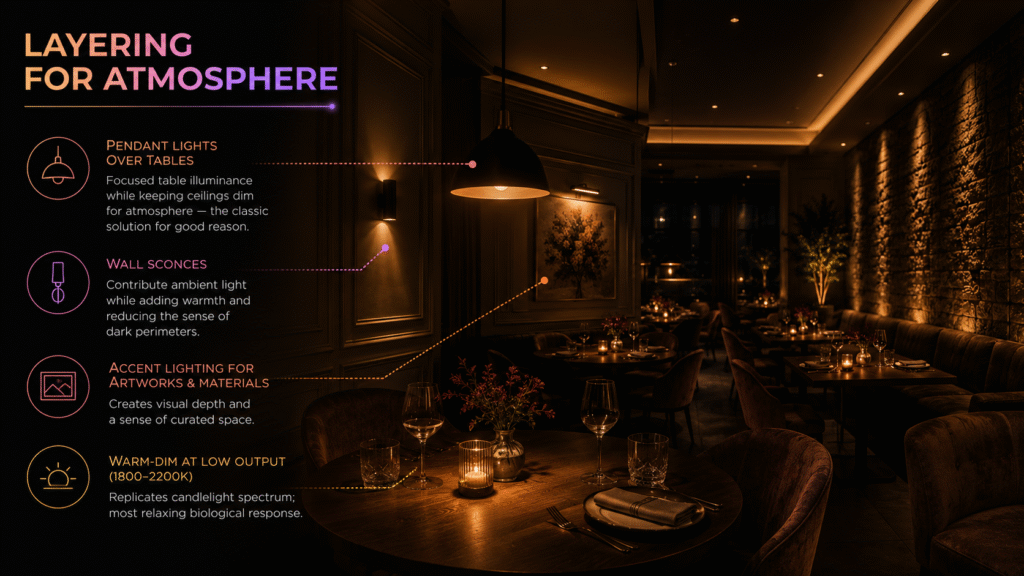
Layering for Atmosphere
- Pendant lights over tables: Focused table illuminance while keeping ceilings dim for atmosphere —the classic solution for good reason
- Wall sconces: Contribute ambient light while adding warmth and reducing the sense of dark perimeters
- Accent lighting for artworks and materials: Creates visual depth and a sense of curated space
- Warm-dim at low output (1800–2200K): Replicates candlelight spectrum; most relaxing biological response
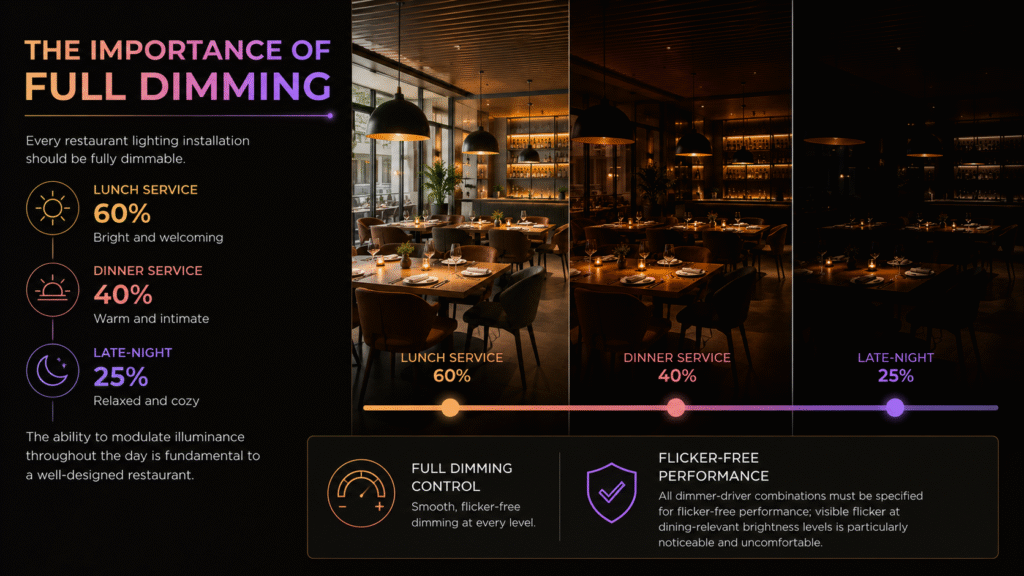
The Importance of Full Dimming
Every restaurant lighting installation should be fully dimmable. Lunch service at 60%, dinner at 40%, late-night at 25% — the ability to modulate illuminance throughout the day is fundamental to a well-designed restaurant. All dimmer-driver combinations must be specified for flicker-free performance; visible flicker at dining-relevant brightness levels is particularly noticeable and uncomfortable.
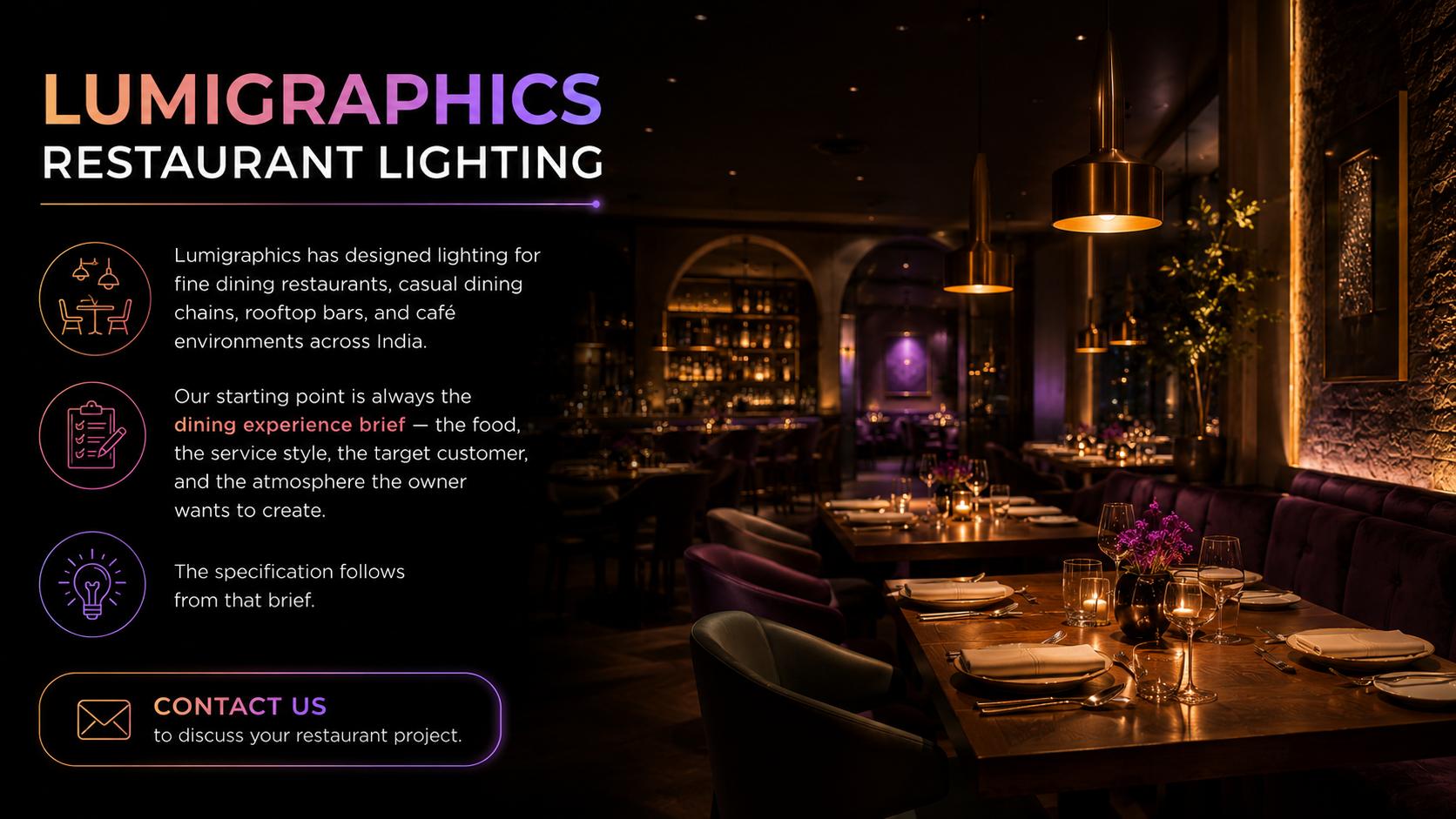
Lumigraphics Restaurant Lighting
Lumigraphics has designed lighting for fine dining restaurants, casual dining chains, rooftop bars, and café environments across India. Our starting point is always the dining experience brief — the food, the service style, the target customer, and the atmosphere the owner wants to create. The specification follows from that brief. Contact us to discuss your restaurant project.