
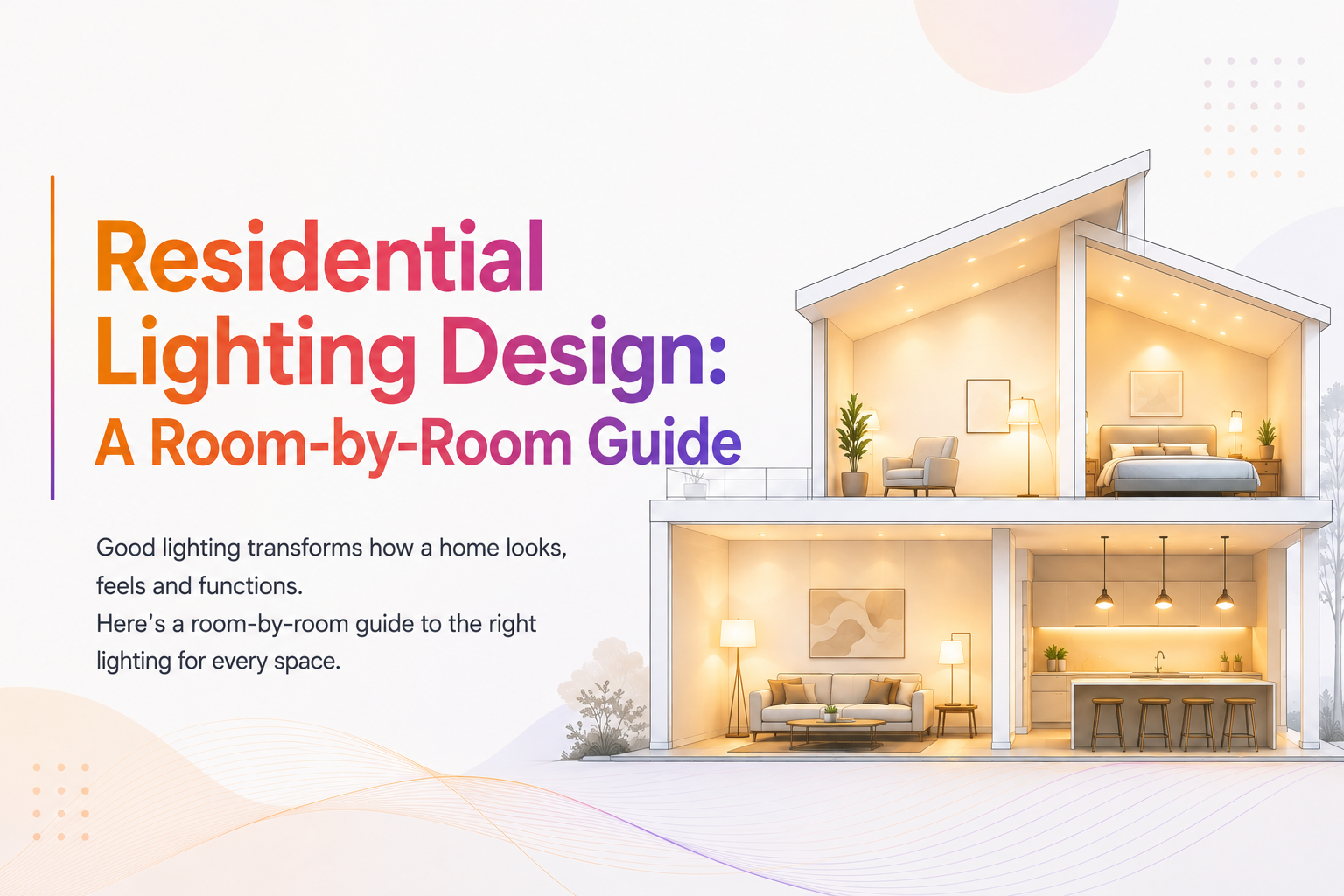
Residential Lighting Design: A Room-by- Room Guide
Residential lighting design is personal. Unlike commercial projects where standards and compliance guide the brief, in a home the goal is to support daily life — from focused work to relaxed evenings — while reflecting the personality of the people who live there. This room-by-room guide covers the essentials.
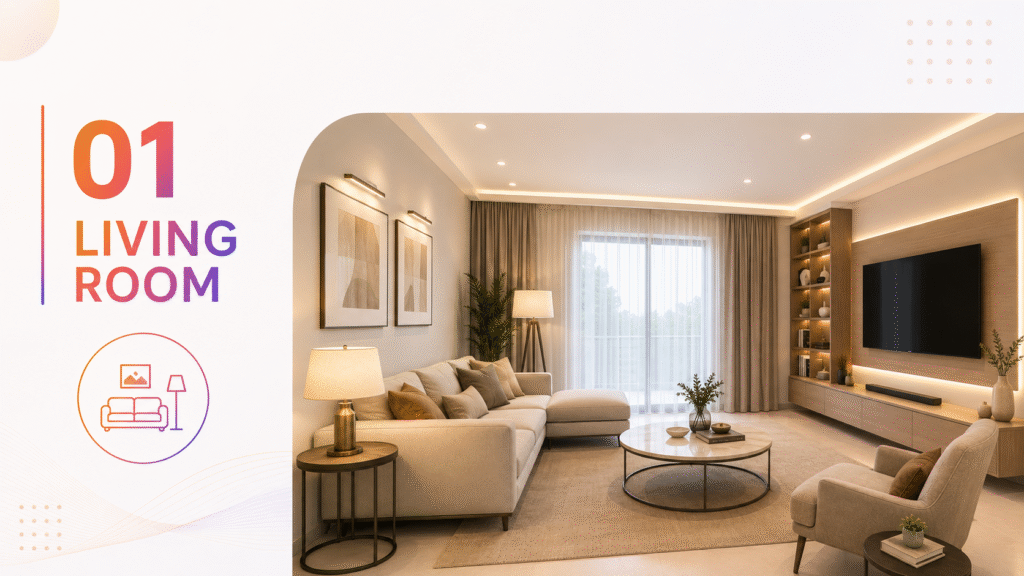
Living Room
Target: 150–300 lux ambient; 300–500 lux for reading tasks. The living room needs the most flexibility of any room — it functions as entertainment space, conversation area, reading room, and sometimes workspace. A layered approach is essential: recessed ambient downlights, floor and table lamps for task and accent, and feature lighting for TV walls or artworks. Dimming throughout is non-negotiable.
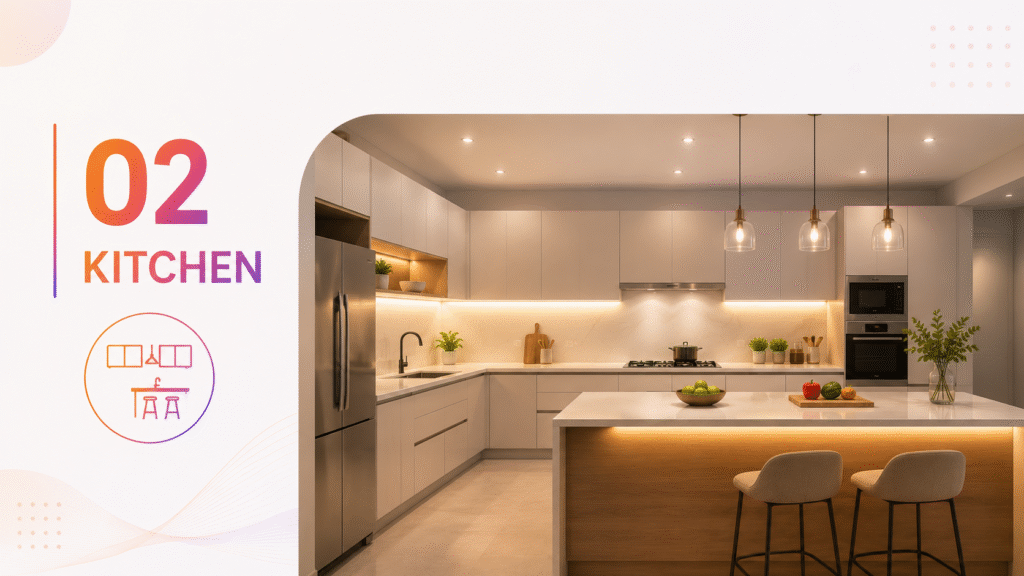
Kitchen
Target: 300 lux ambient; 500+ lux at countertops and hob. Under-cabinet LED strip lighting at countertops is essential — overhead downlights rarely provide adequate illuminance on work surfaces due to overhead cabinet shadows. A slightly higher CCT (3000–4000K) suits kitchens, and high CRI (90+) is important for accurate food colour assessment during preparation.
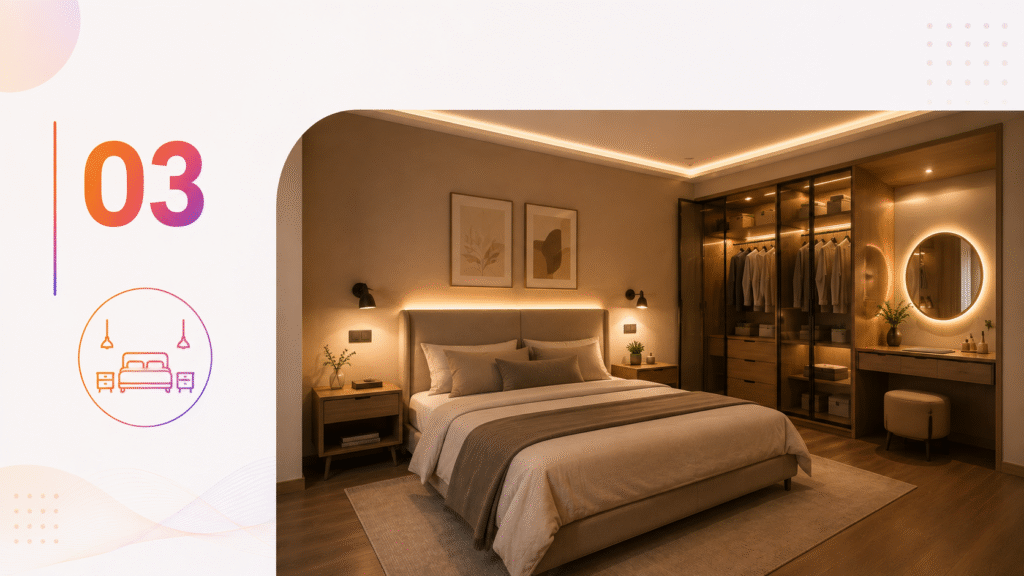
Master Bedroom
Target: 100–150 lux ambient; 300+ lux at dressing and vanity areas. Warm CCT (2700K) throughout. Bedside reading lights with individual switching on each side. A separate dressing or wardrobe area with higher illuminance and high CRI for accurate clothing colour matching. Avoid recessed downlights directly above the bed — lying in bed looking up at a bare LED module is deeply uncomfortable.
Bathrooms
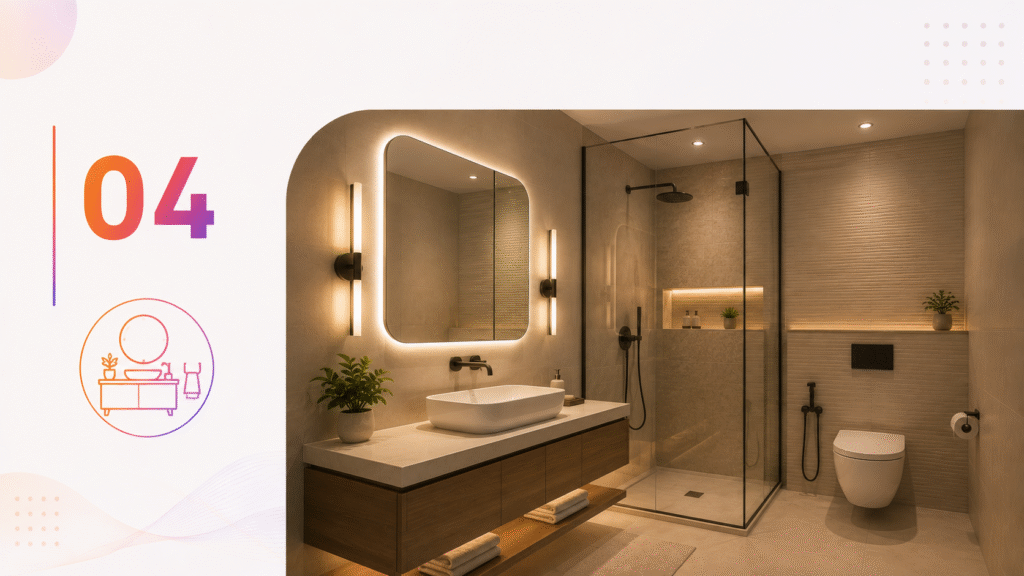
Target: 300 lux ambient; 500 lux at mirror and vanity. The common mistake is relying on a single overhead downlight, which creates unflattering downward shadows on the face. Mirror-adjacent or mirror-integrated lighting at face level — side-mounted wall lights or a front-illuminated mirror — provides far superior results. Use Ra 90+ at 3000K for accurate skin tone rendering.
Home Office
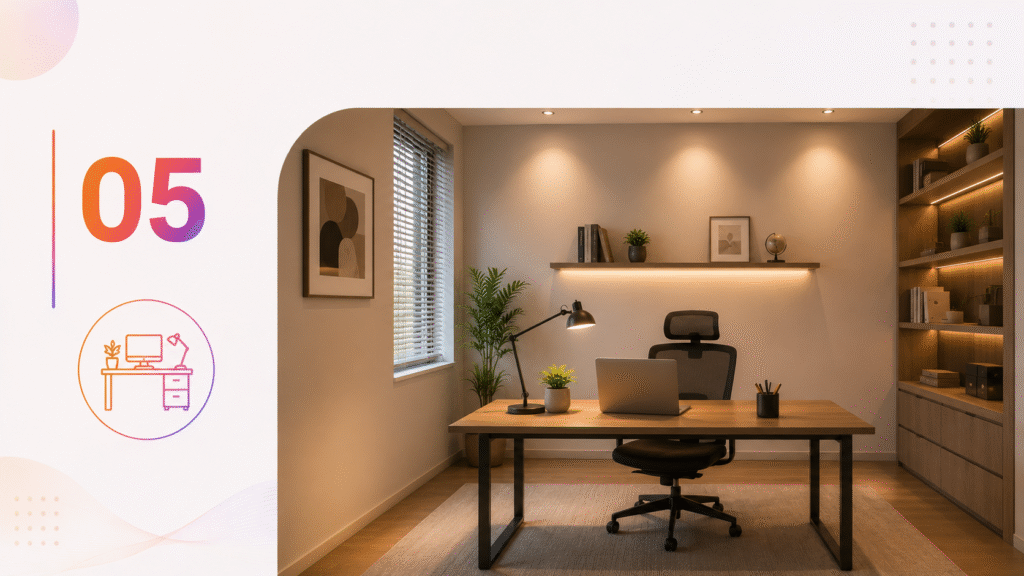
Target: 300–500 lux on the desk; UGR < 19. A dedicated task light on the desk is the most important fixture — it provides focused illuminance without causing screen reflections from overhead sources. Ambient lighting should maintain 200–300 lux to reduce contrast between screen and surroundings, minimising eye fatigue during long work sessions. CCT of 3000–4000K supports alertness during work hours.
Children’s Rooms
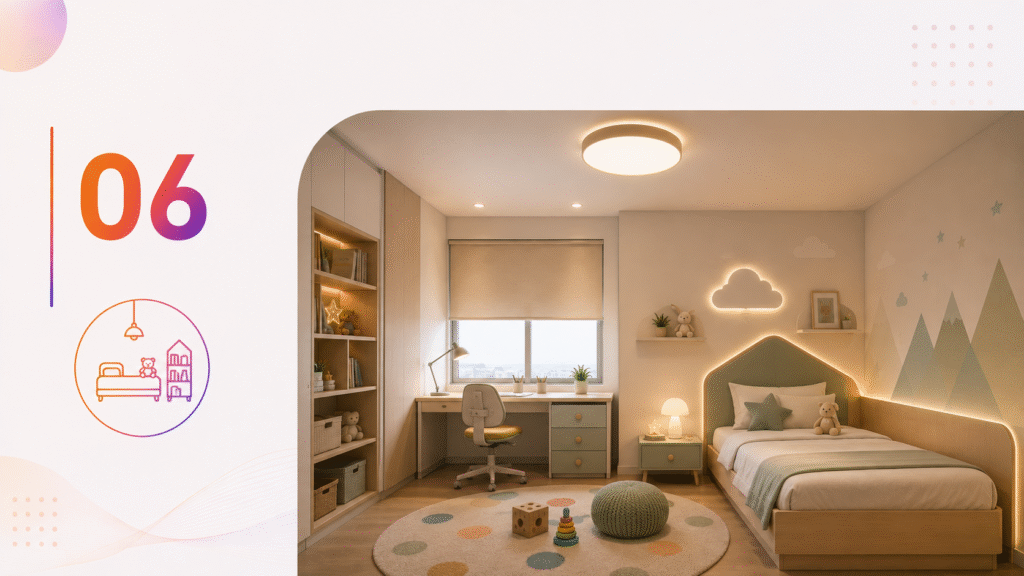
Children’s rooms serve multiple functions: play, homework, and sleep. Separate functional and ambient circuits — a ceiling-mounted luminaire for play and homework (300+ lux), and a warm-dim nightlight or dim bedside lamp for bedtime. Anti-glare optics and safety ratings are important considerations.
Outdoor and Terrace Areas
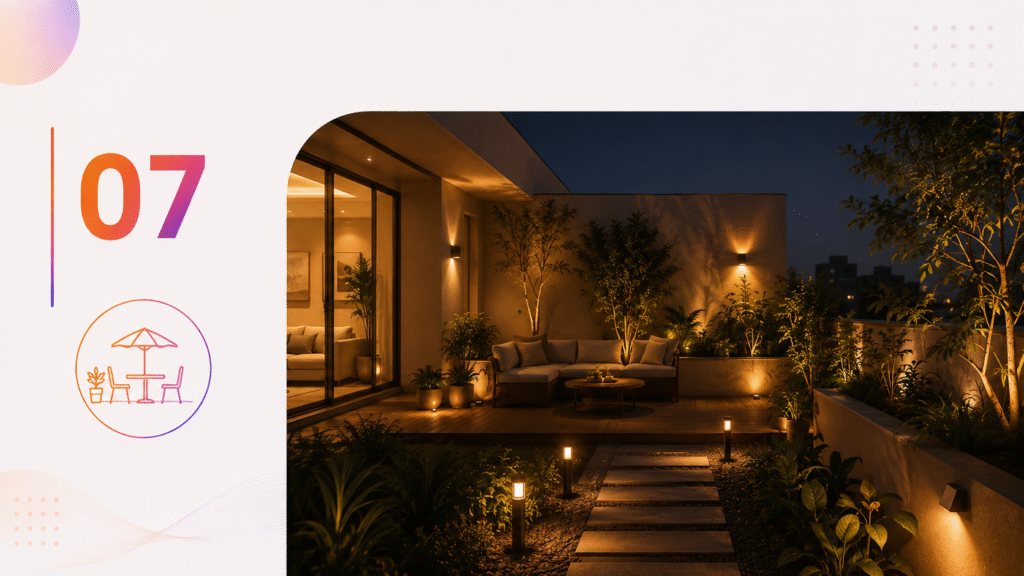
Residential outdoor lighting should extend living space after dark, not just provide security illuminance. Warm CCT (2700K) for terraces and gardens creates a welcoming atmosphere. IP65-rated fixtures for all exterior applications. Path and step lighting for safe navigation is both functional and contributes to the overall landscape lighting composition.
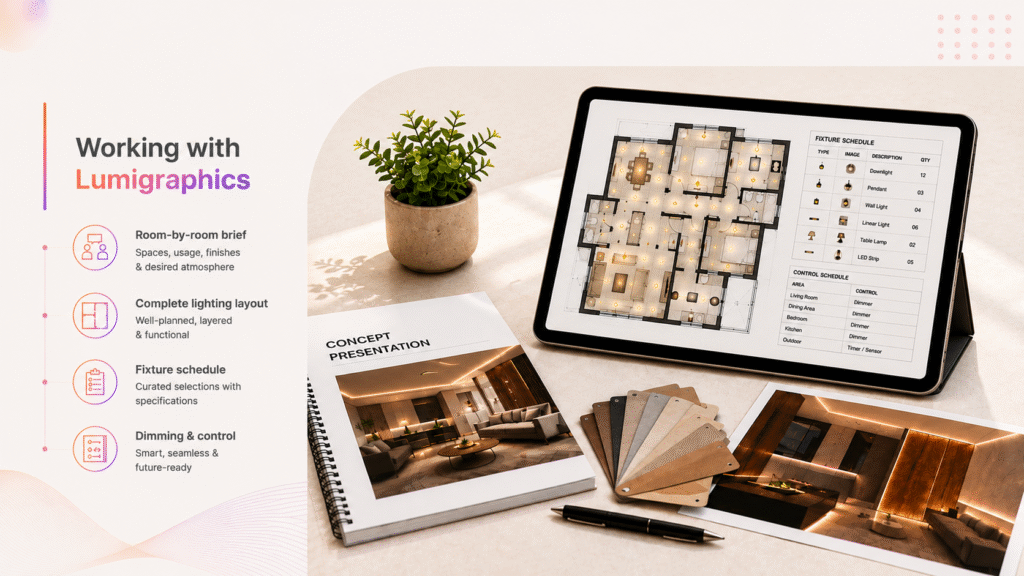
Working with Lumigraphics
Our residential lighting design service begins with a room-by-room brief covering how each space is used, the finishes and materials involved, and the atmosphere the client wants to create. We deliver a complete lighting layout, fixture schedule, and dimming/control specification. Contact us to discuss your home.