
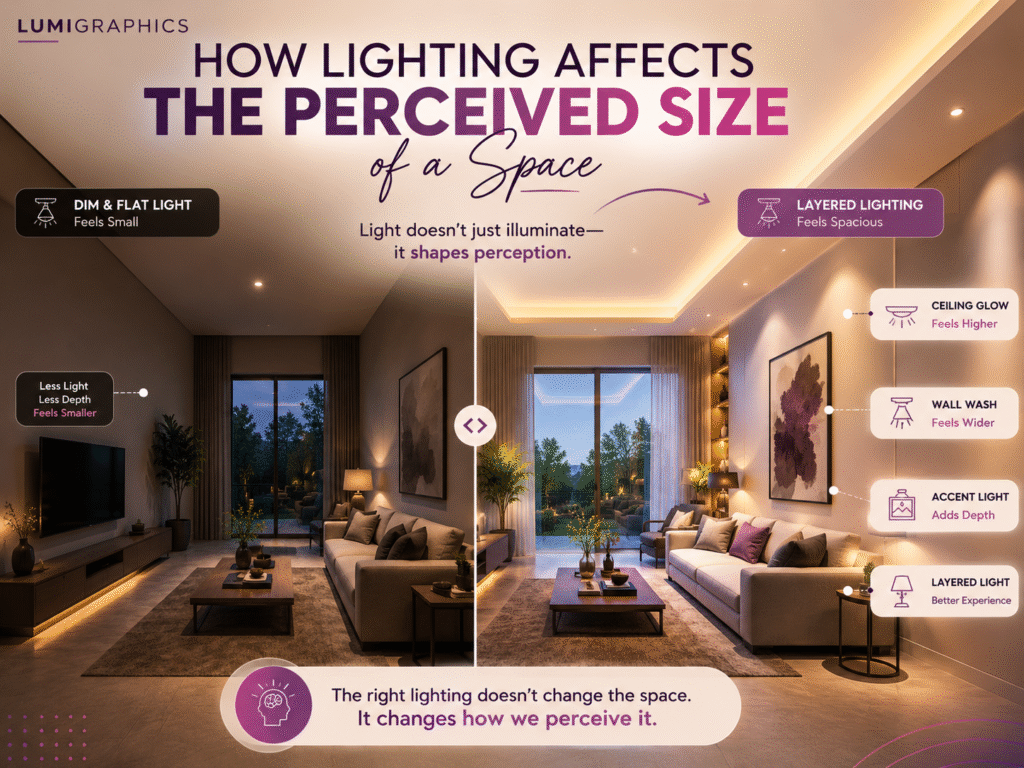
How Lighting Affects the Perceived Size of a Space
Light doesn’t just illuminate — it shapes perception. The way a space is lit directly influences whether it feels expansive or intimate, tall or low, wide or narrow. Understanding these perceptual mechanisms gives lighting designers a powerful tool for shaping spatial experience, independently of actual dimensions.
Brightness and Perceived Spaciousness
Higher overall luminance makes spaces feel larger and more open. Well-lit retail environments feel more spacious than dim ones at identical floor areas. Conversely, lower illuminance creates intimacy and enclosure — ideal for private dining, lounge areas, or bedroom spaces where comfort and warmth are the priority.
Wall Washing to Expand Perceived Width
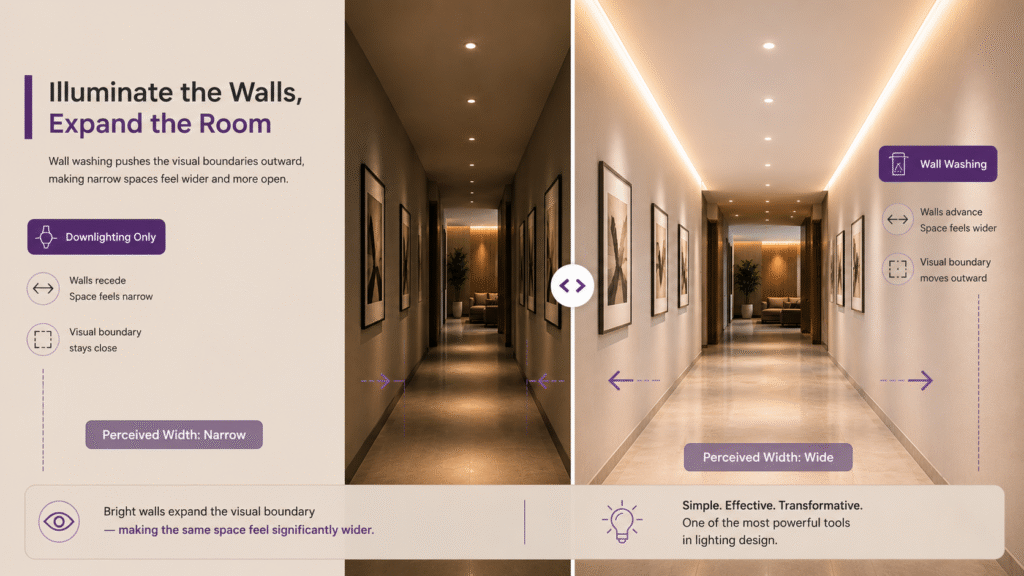
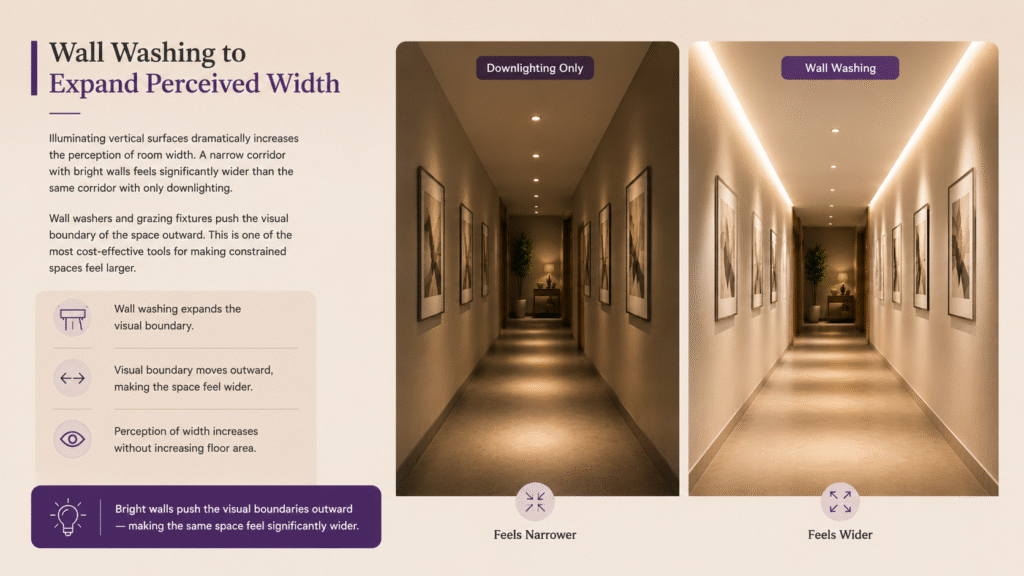
Illuminating vertical surfaces dramatically increases the perception of room width. A narrow corridor with bright walls feels significantly wider than the same corridor with only downlighting. Wall washers and grazing fixtures push the visual boundary of the space outward. This is one of the most cost-effective tools for making constrained spaces feel larger.
Ceiling Illumination and Perceived Height
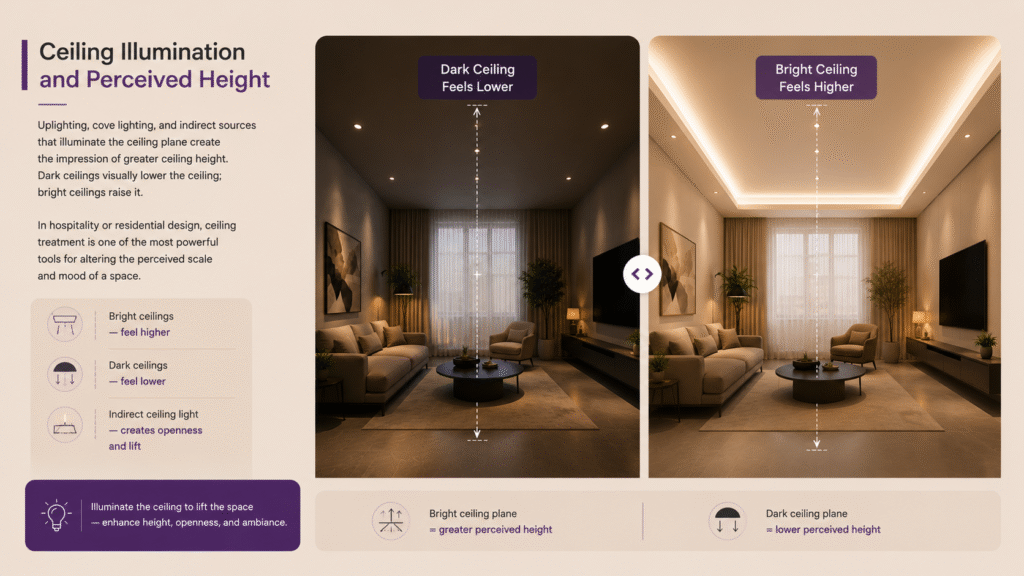
Uplighting, cove lighting, and indirect sources that illuminate the ceiling plane create the impression of greater ceiling height. Dark ceilings visually lower the ceiling; bright ceilings raise it. In hospitality or residential design, ceiling treatment is one of the most powerful tools for altering the perceived scale and mood of a space.
Accent Lighting to Create Depth
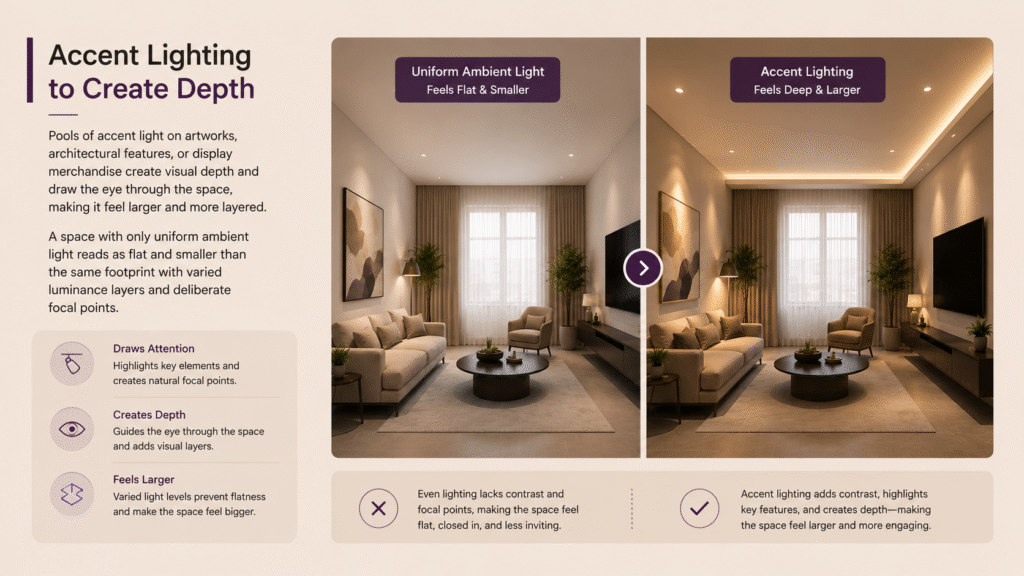
Pools of accent light on artworks, architectural features, or display merchandise create visual depth and draw the eye through the space, making it feel larger and more layered. A space with only uniform ambient light reads as flat and smaller than the same footprint with varied luminance layers and deliberate focal points.
Dark Perimeters for Intimacy
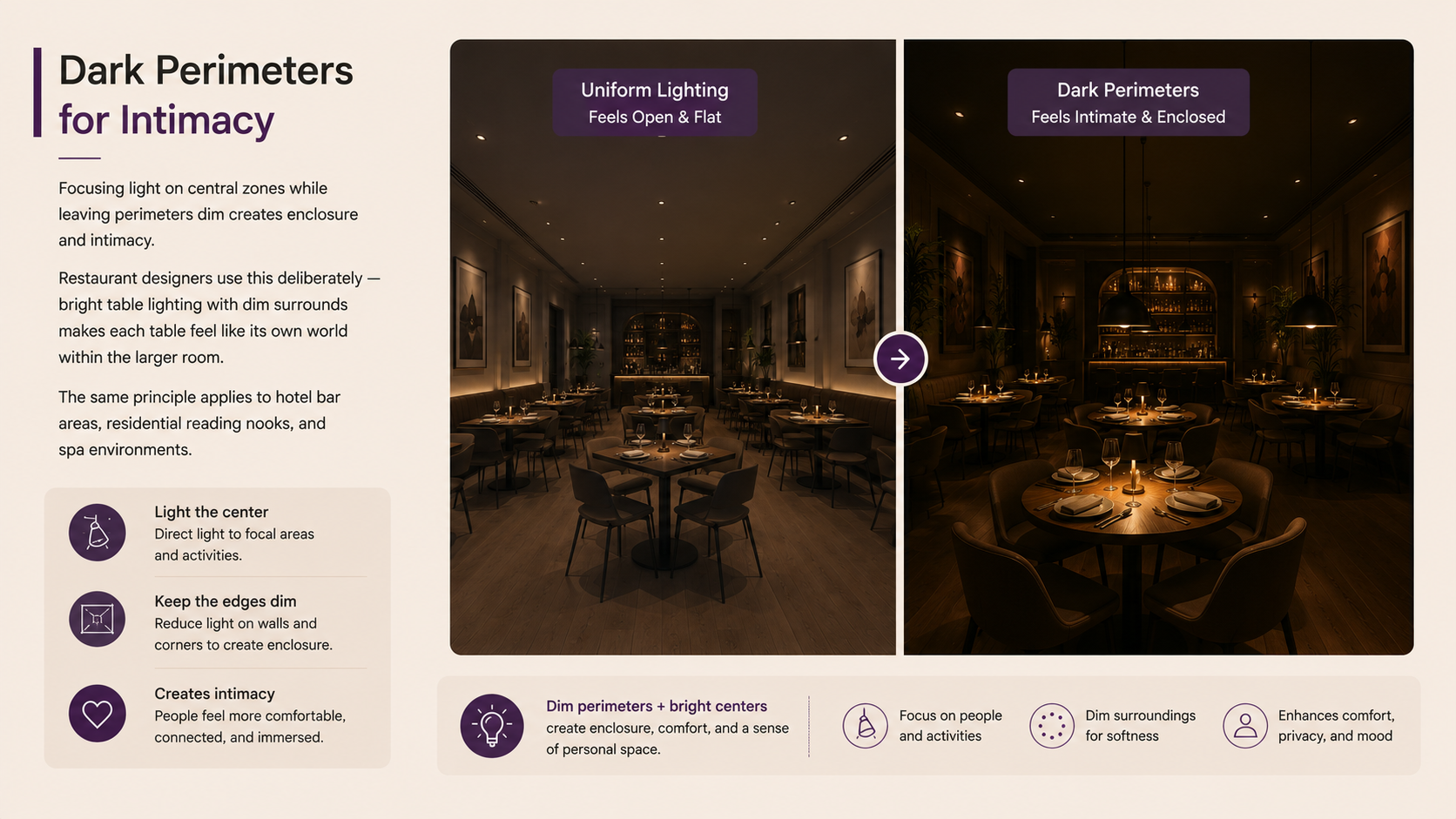
Focusing light on central zones while leaving perimeters dim creates enclosure and intimacy. Restaurant designers use this deliberately — bright table lighting with dim surrounds makes each table feel like its own world within the larger room. The same principle applies to hotel bar areas, residential reading nooks, and spa environments.
Perception as a Design Brief Parameter
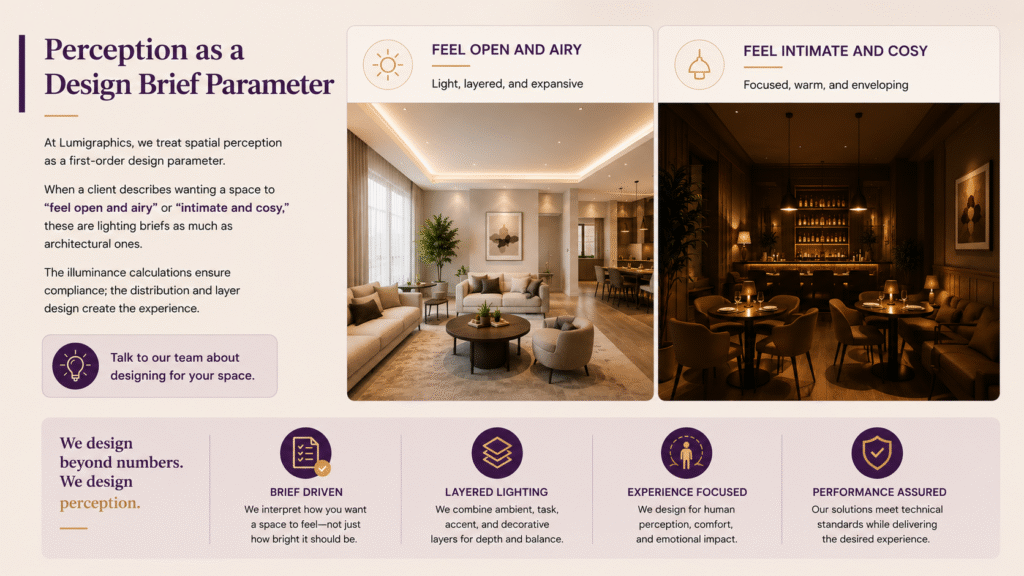
At Lumigraphics, we treat spatial perception as a first-order design parameter. When a client describes wanting a space to “feel open and airy” or “intimate and cosy,” these are lighting briefs as much as architectural ones. The illuminance calculations ensure compliance; the distribution and layer design create the experience. Talk to our team about designing for your space.