
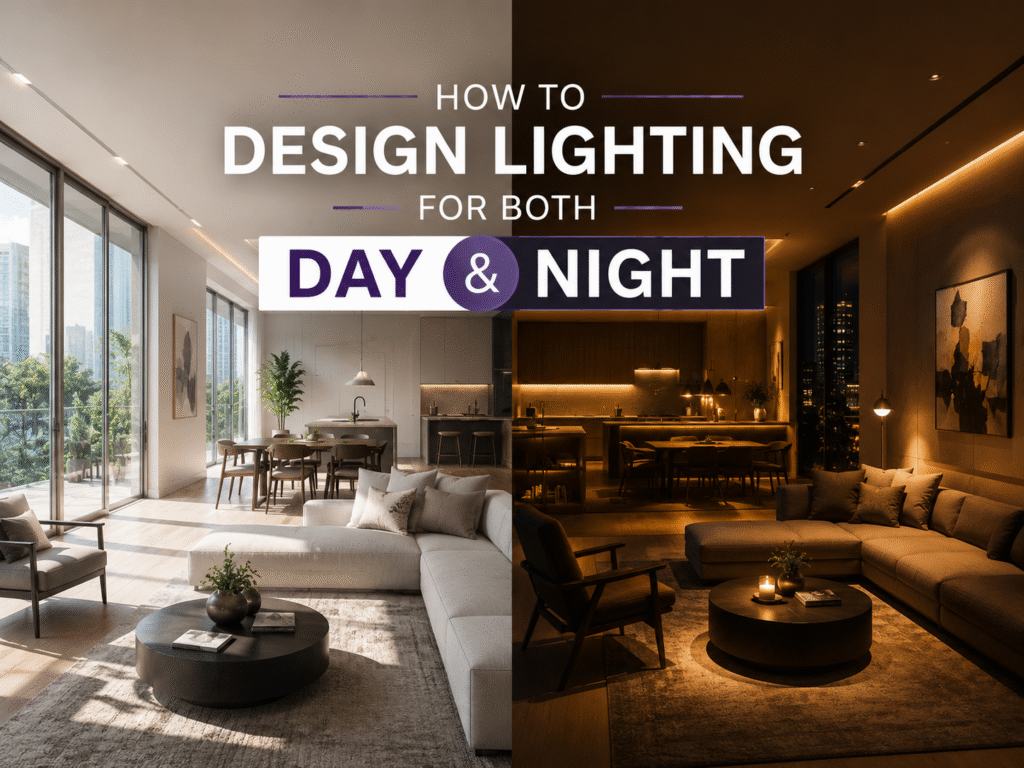
How to Design Lighting for Both Day and Night
The best buildings look different at dawn, mid-day, dusk, and midnight — and that’s by design. A successful dual-mode lighting strategy that works harmoniously with natural daylight and delivers atmosphere after dark requires deliberate planning from the earliest design stage.
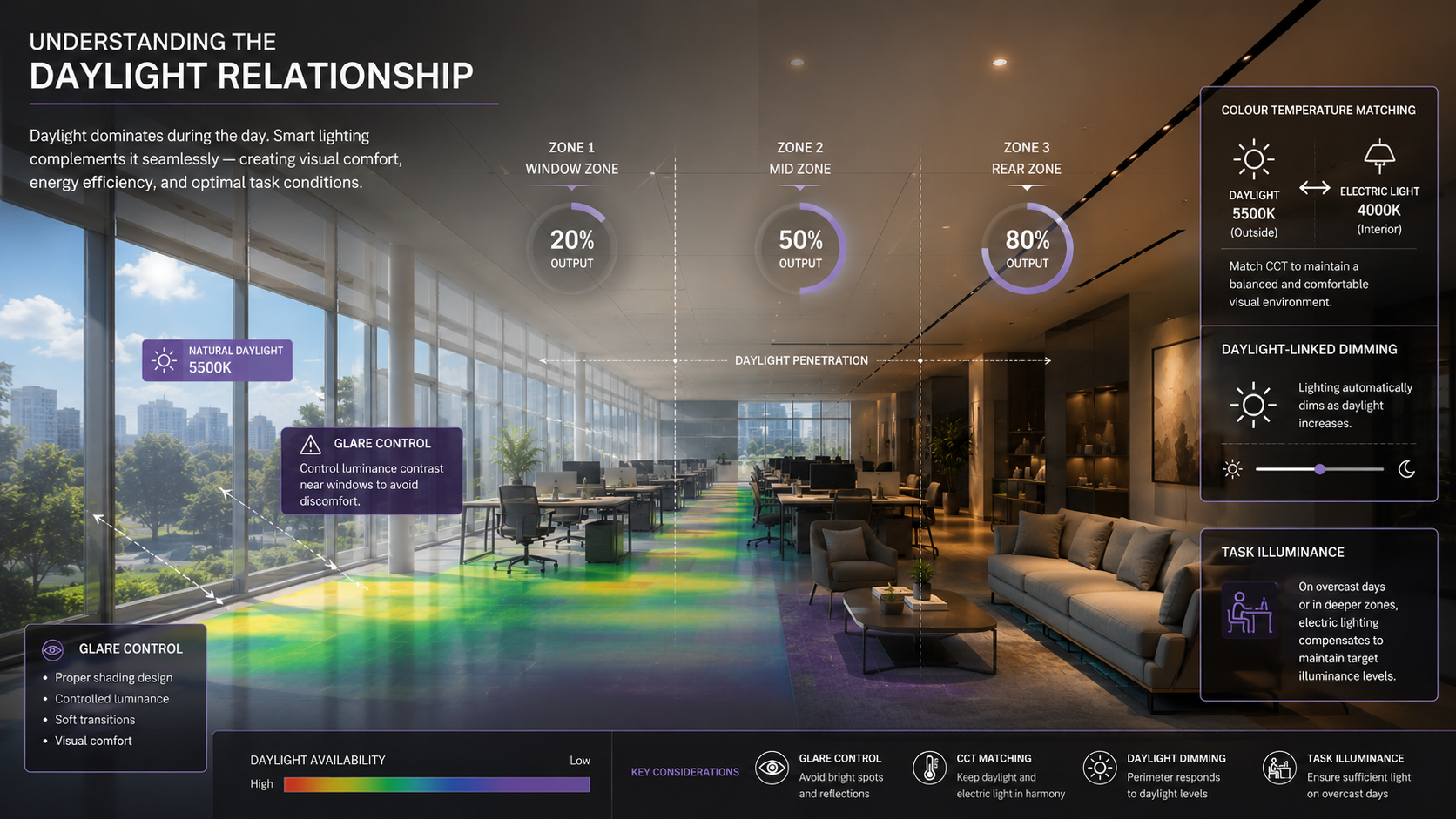
Understanding the Daylight Relationship
During daylight hours, artificial lighting doesn’t operate in isolation. Daylight dominates, and electric lighting must either complement it or step back. Key considerations include glare control (luminaires that look fine at night can create uncomfortable bright spots against a sunlit window), colour temperature matching (3000K sources create jarring contrast near 5500K+ daylight), switching and dimming zones (perimeter zones should respond to daylight levels), and task illuminance on overcast days when electric lighting must fully compensate.
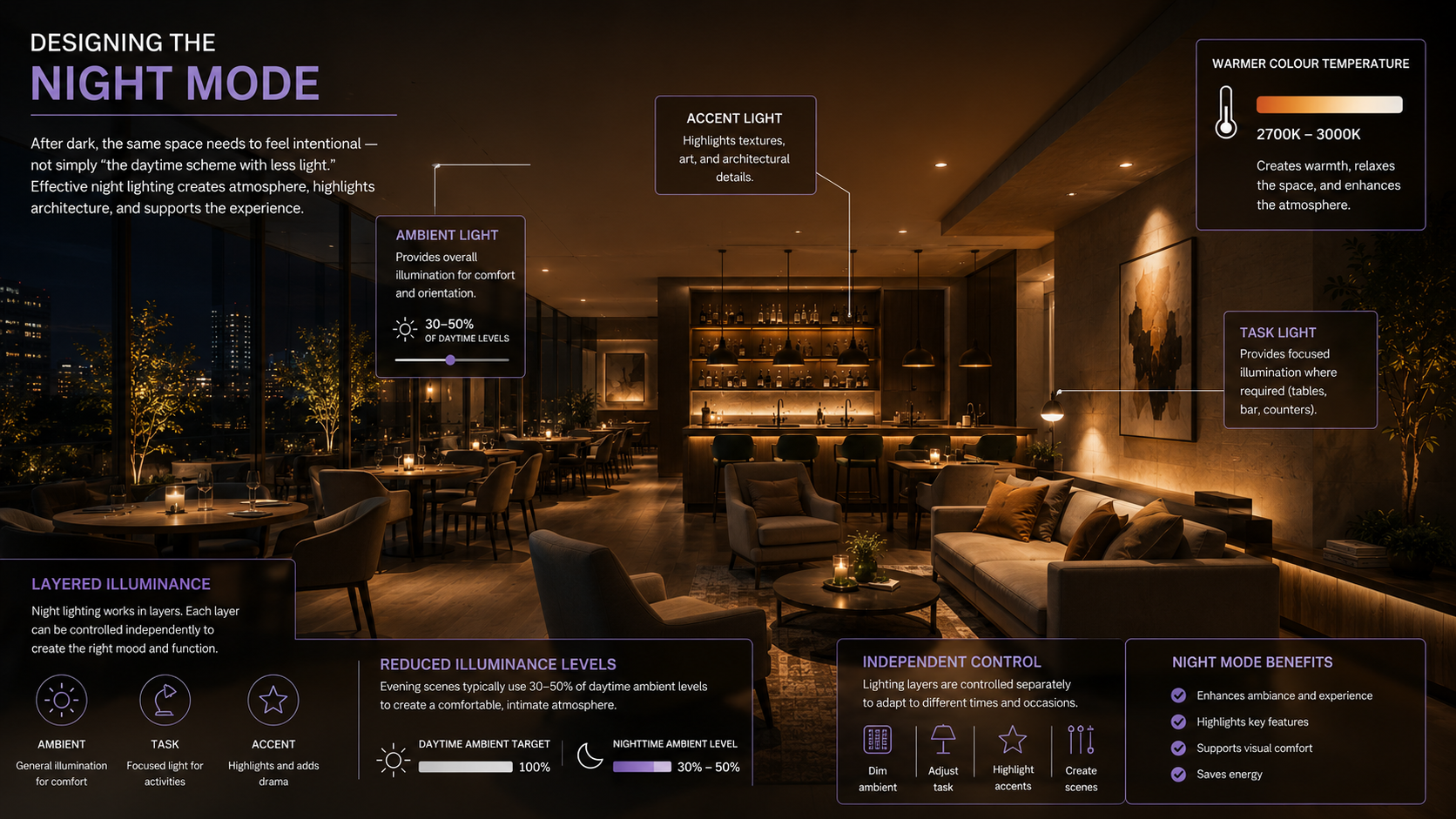
Designing the Night Mode
After dark, the same space needs to feel intentional — not simply “the daytime scheme with less light.” Effective night lighting uses layered illuminance (ambient, task, and accent layers controlled independently), lower CCT for warmth (tunable white or warm-dim sources at 2700–3000K), accent lighting on features invisible during the day, and reduced illuminance levels (evening scenes typically at 30–50% of daytime targets in ambient zones).
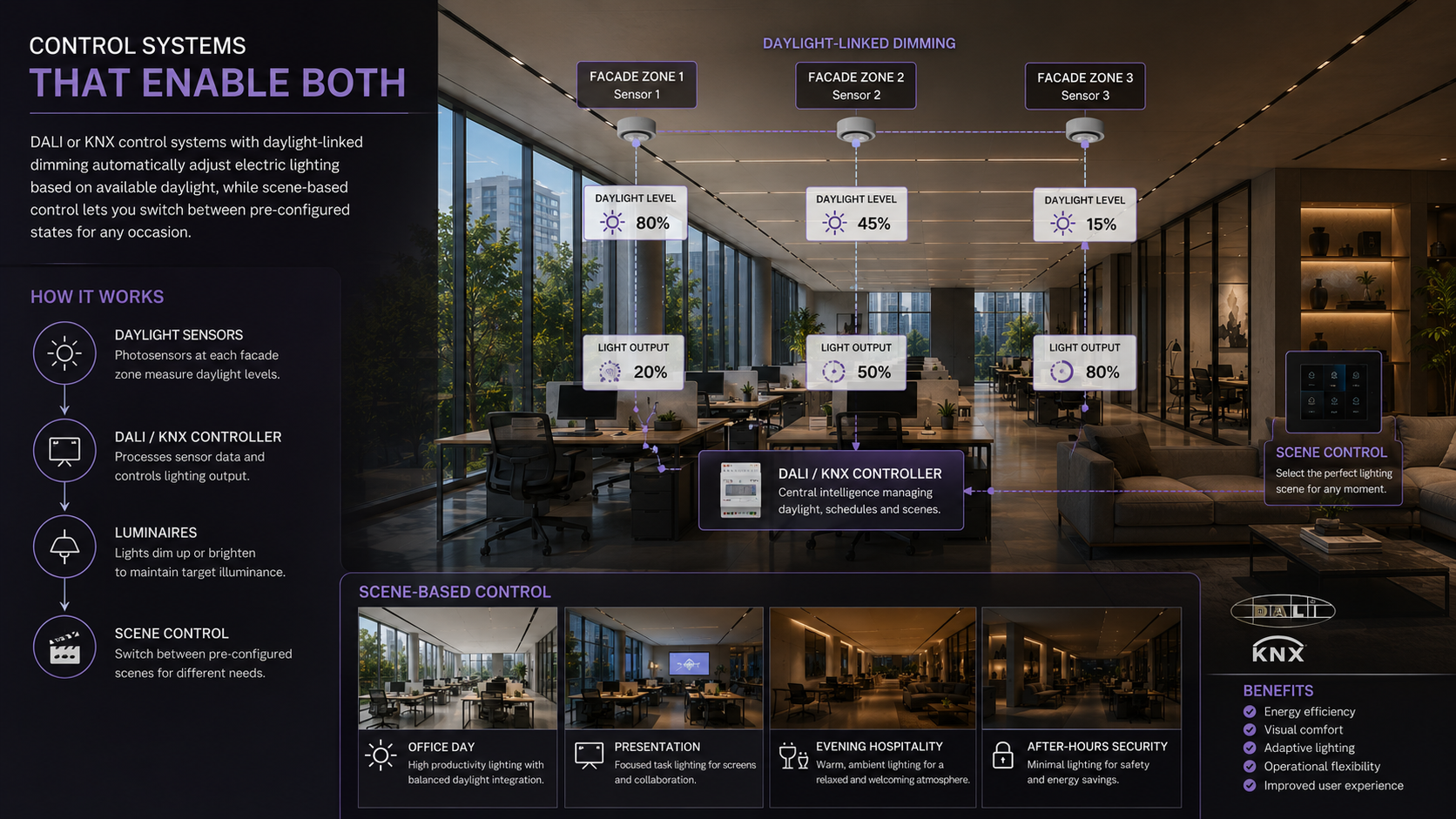
Control Systems That Enable Both
A DALI or KNX control system with daylight-linked dimming is the standard solution. Photosensors at each facade zone maintain target illuminance by dimming electric lighting as daylight increases and raising it as daylight fades. Scene-based control allows switching between pre-configured states: office day, presentation, evening hospitality, after-hours security.
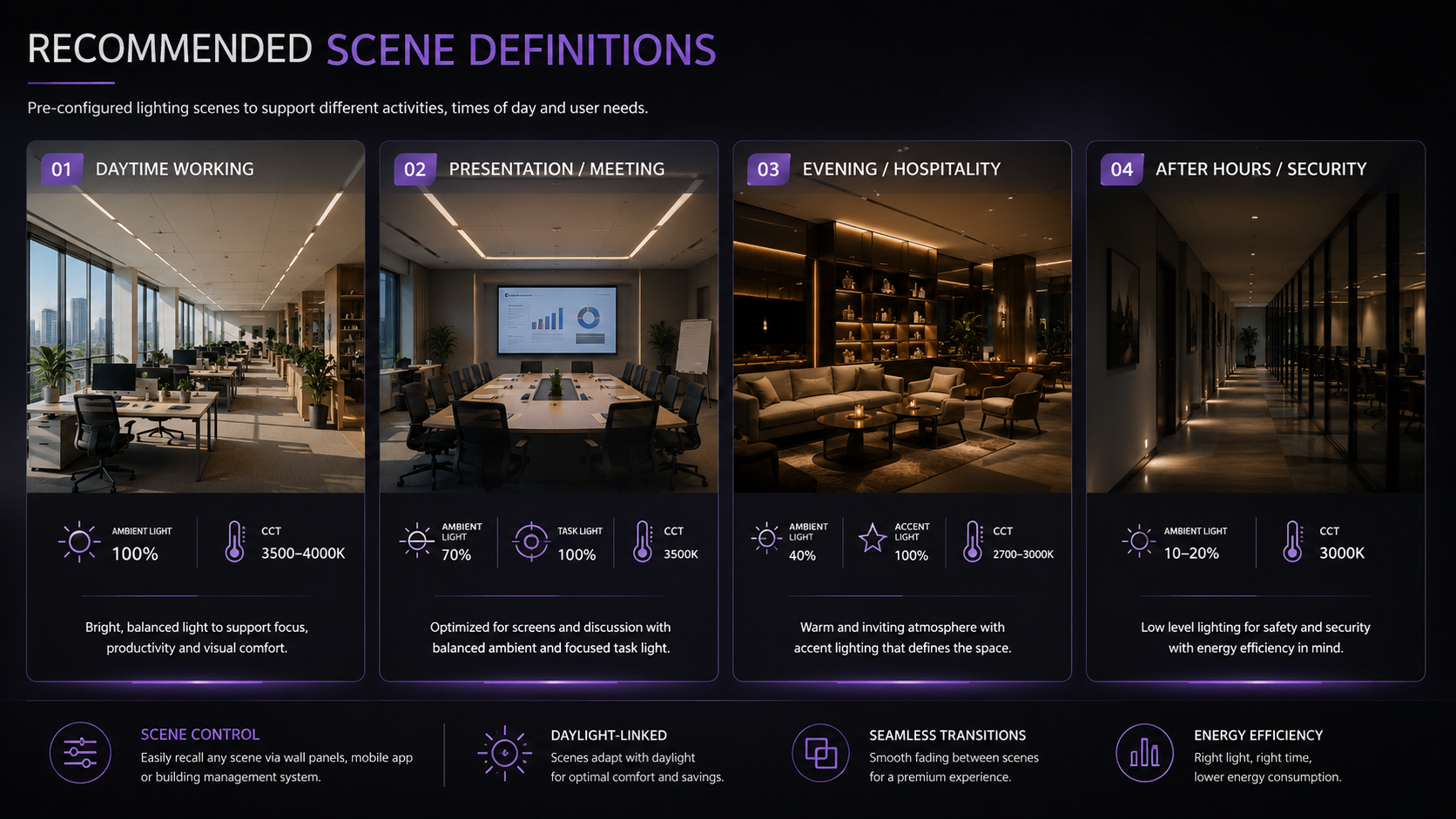
Recommended Scene Definitions
| Scene | Typical Illuminance | CCT |
|---|---|---|
| Daytime working | 100% ambient | 3500–4000K |
| Presentation / meeting | 70% ambient, 100% task | 3500K |
| Evening / hospitality | 40% ambient, 100% accent | 2700–3000K |
| After hours / security | 10–20% ambient | 3000K |
Lumigraphics Recommendation
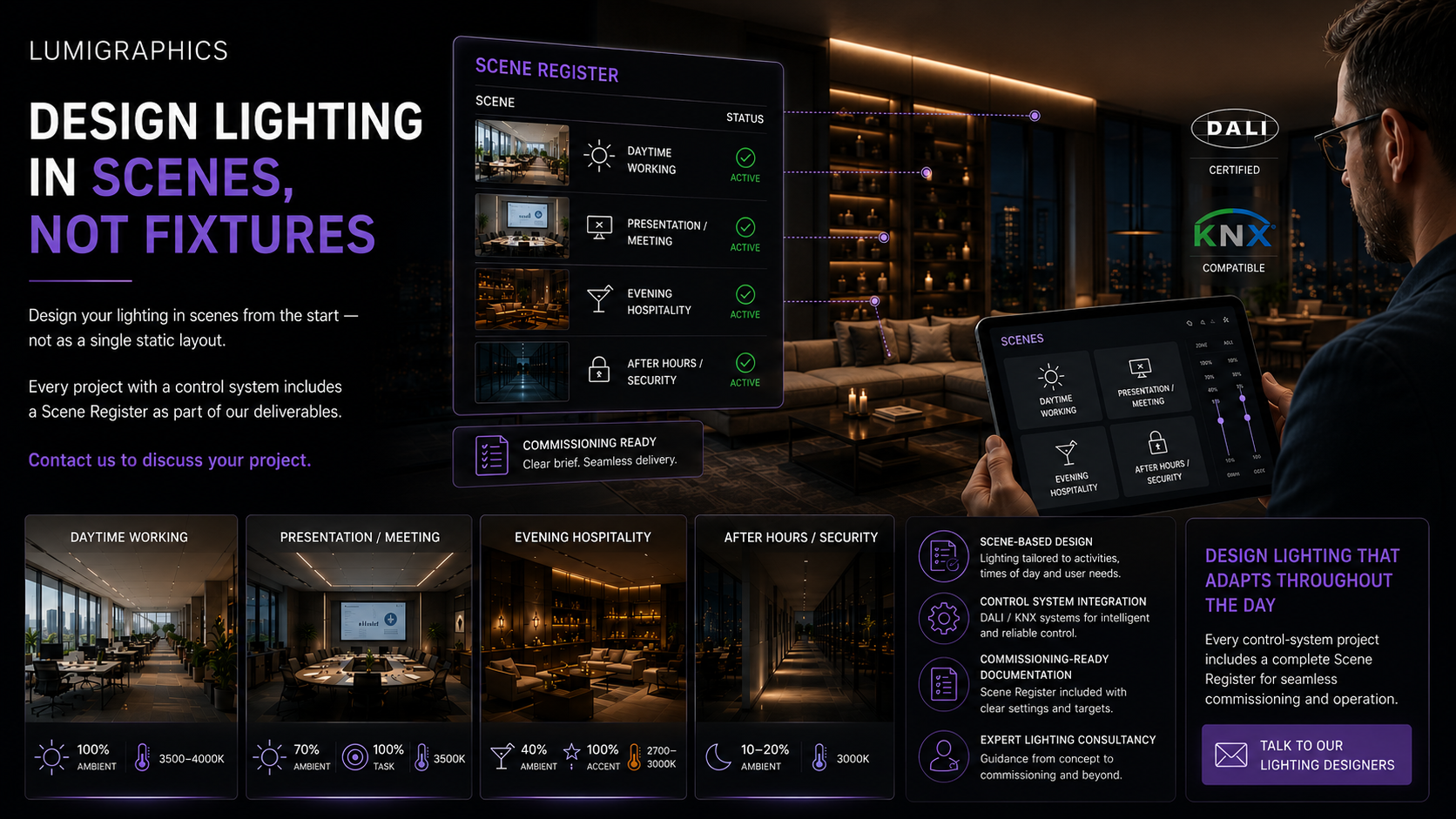
Design your lighting in scenes from the start — not as a single static layout. Document all scenes in the lighting control specification so commissioning engineers have a clear brief. At Lumigraphics, every project with a control system includes a Scene Register as part of our deliverables. Contact us to discuss your project.