

What is Human-Centric Lighting and Why Does It Matter?
Human-centric lighting (HCL) is one of the most important advances in modern lighting design. Rather than treating light purely as a functional tool, HCL recognises that light profoundly affects human biology, mood, cognitive performance, and long-term health. As awareness of these effects grows, architects, facility managers, and wellness-focused clients are increasingly specifying HCL in commercial and residential projects. Lumigraphics supports HCL design through simulation-validated specifications that deliver measurable wellbeing outcomes.
The Science Behind Human-Centric Lighting
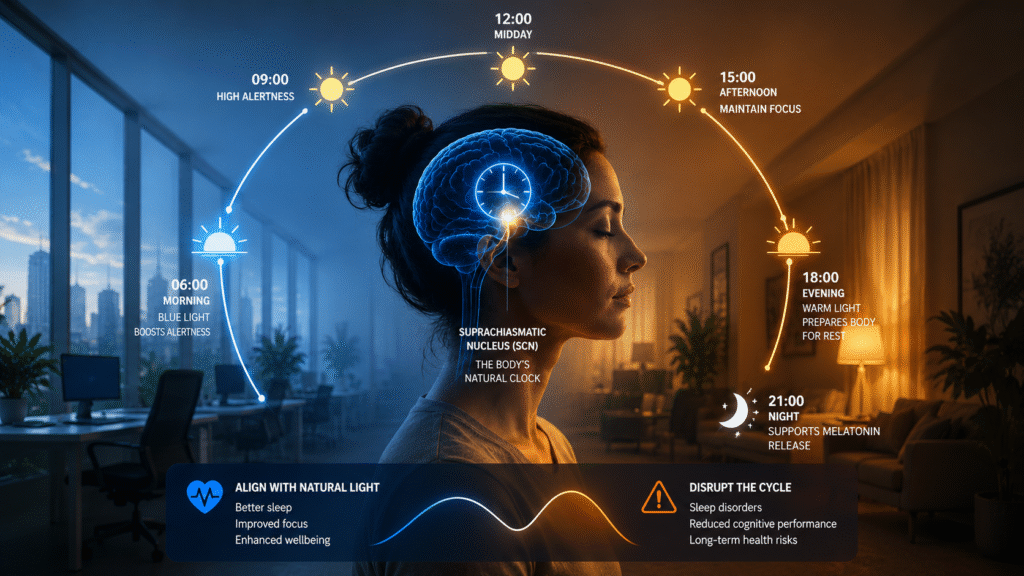
The human circadian rhythm is primarily regulated by light. Exposure to blue-rich light in the morning suppresses melatonin and promotes alertness. As the day progresses, a gradual shift to warmer, lower-intensity light signals the body to prepare for rest. When artificial lighting disrupts this natural cycle, as most conventional office and home lighting does, it contributes to sleep disorders, reduced cognitive performance, and long-term health consequences.
Dynamic Lighting: Supporting the Circadian Cycle
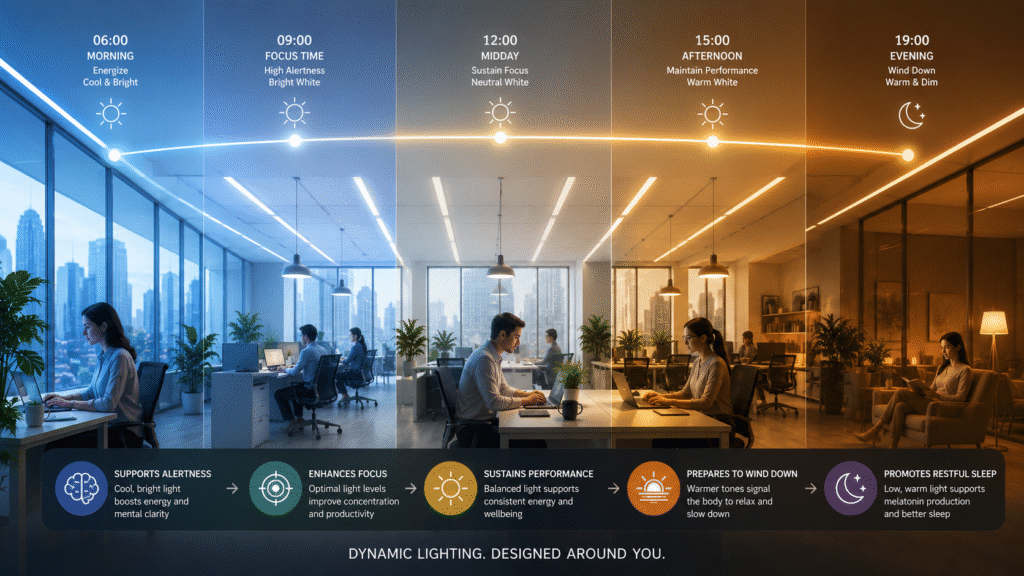
Dynamic tunable-white lighting systems allow colour temperature and intensity to shift throughout the day in alignment with natural daylight. In the morning, higher CCT and brightness levels support focus and energy. In the afternoon, the system transitions gradually to warmer tones. By evening, low-intensity warm lighting supports the body wind-down process. Lumigraphics designs these dynamic sequences based on occupancy patterns, building orientation, and client wellness objectives.
HCL in Workplaces, Healthcare, and Education
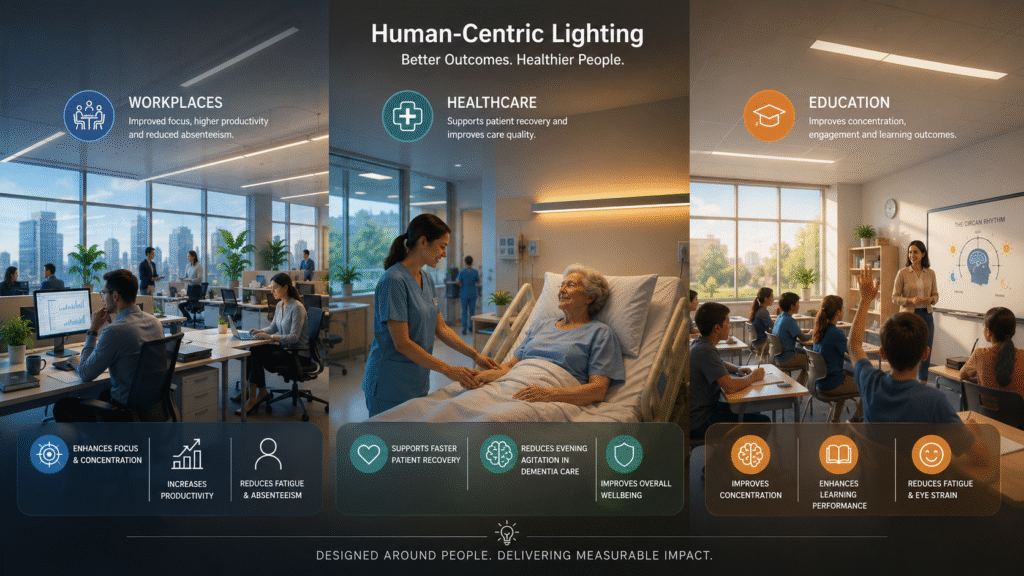
The commercial case for HCL is strongest where human performance and wellbeing directly affect outcomes. In offices, HCL improves focus and reduces absenteeism. In hospitals and care facilities, it supports patient recovery and reduces evening agitation in dementia care. In schools, it improves concentration and reduces fatigue. Lumigraphics has experience designing HCL solutions across all of these sectors.
Simulating HCL Performance
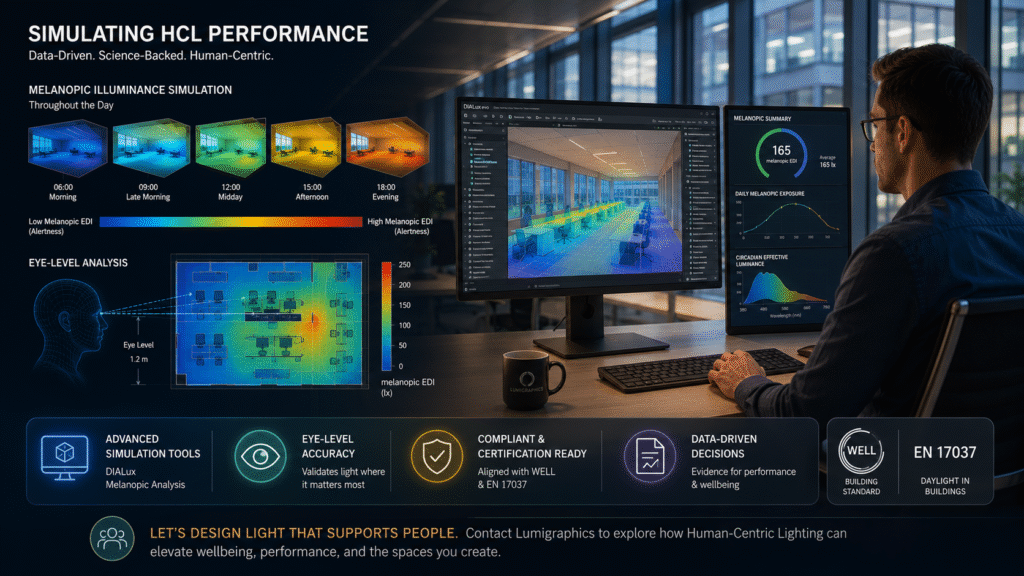
HCL design requires more than selecting tunable-white fixtures. The system must deliver the right melanopic illuminance values at occupant eye level at every point in the day. Lumigraphics uses DIALux and melanopic simulation tools to validate HCL designs against WELL Building Standard and EN 17037 benchmarks, providing clients with the evidence needed for certification and performance guarantees.
Interested in human-centric lighting for your next project? Contact Lumigraphics to explore what HCL can deliver for your space and your people.