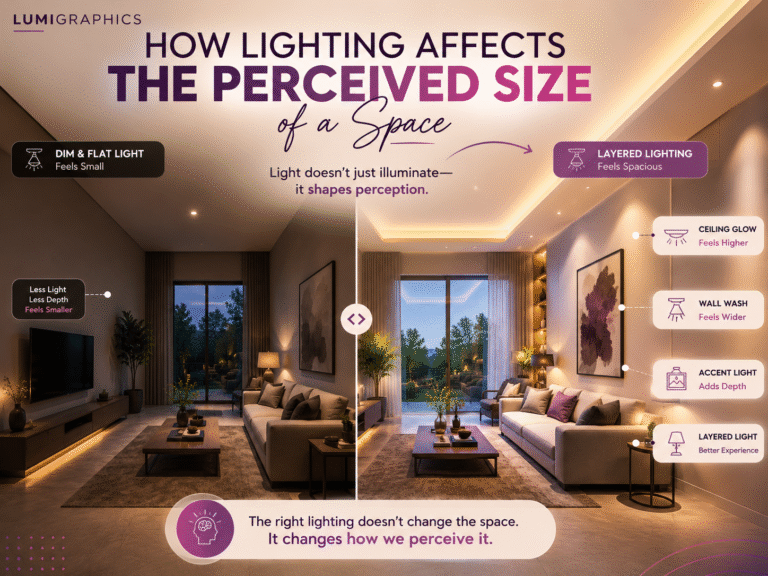
Lighting design — when not planned early — can become one of the biggest bottlenecks in architectural and interior projects. But by introducing lighting wireframes early in the design process, architects and lighting designers can significantly reduce revision cycles, prevent project delays, and ensure stakeholder alignment.
High-quality lighting renders are no longer just visual assets, they are brand statements. They influence how a brand is perceived in terms of quality, innovation, reliability, and professionalism.
What Are Lighting Wireframes and Why They Matter
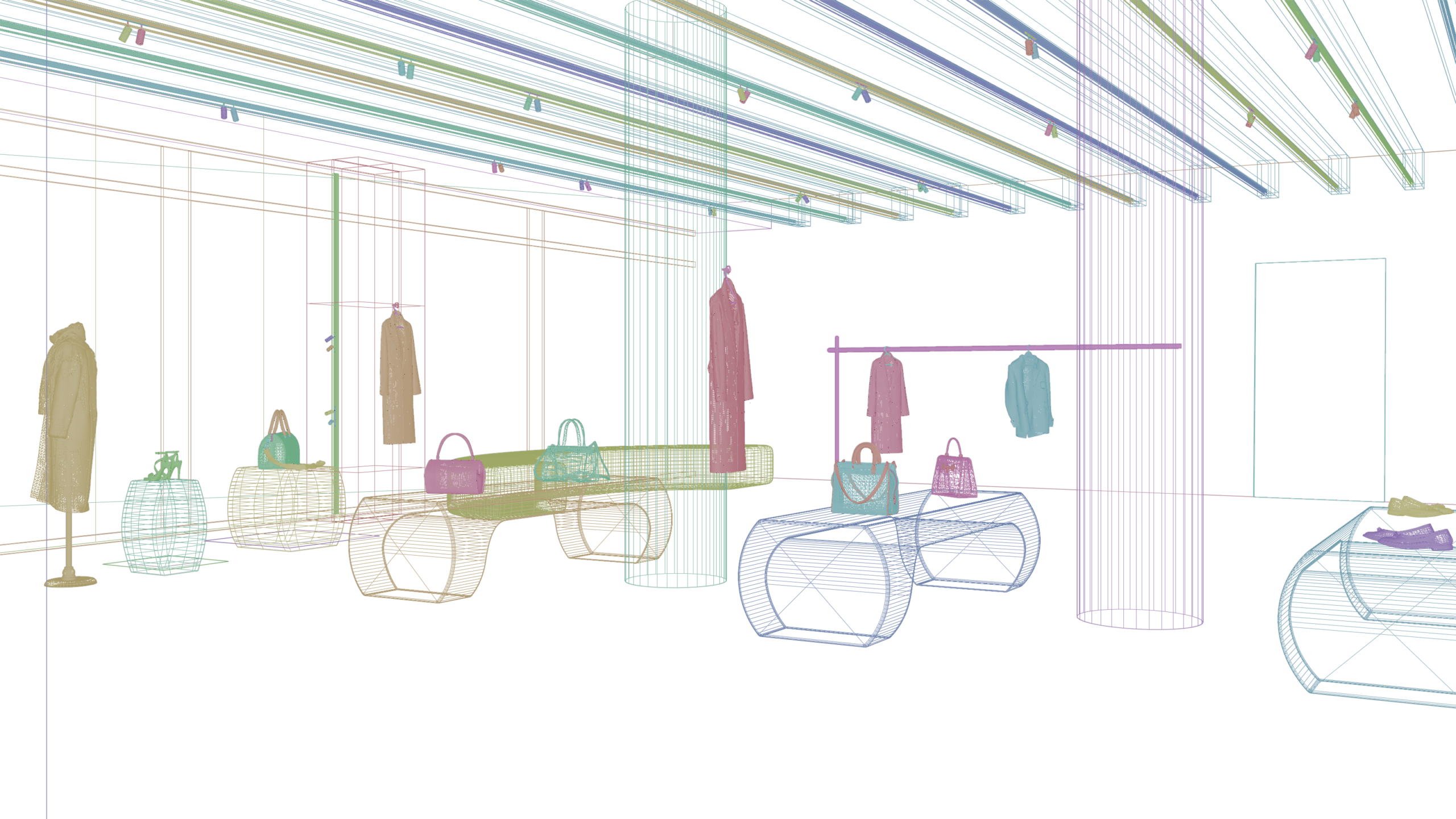
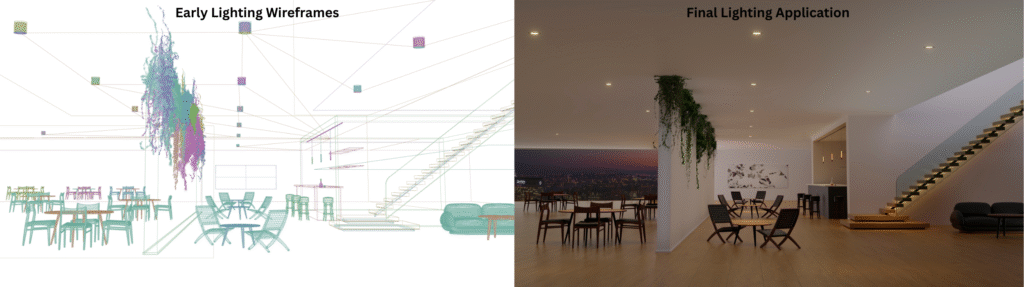
Lighting wireframes are visual representations of light levels, fixture placement, and lighting intent — drawn during the early phases of design. Think of them as the skeleton of your lighting strategy before detailed lighting calculations and construction documents are created.
A lighting wireframe typically includes:
Light fixture placements
Basic beam angles
Light levels by zone
Glare control strategies
Layering of ambient, accent, and task light
These are simple enough to sketch but powerful enough to prevent misunderstandings later.
Primary Benefits of Early Lighting Wireframes
1. Reduce Design Revisions
Late changes to lighting layout or intent are costly and time-consuming.
When design teams work without an early lighting wireframe:
Lighting is often misinterpreted
Rework is frequent
Construction documents lag behind
Early wireframes create a clear visual roadmap that all stakeholders — architects, engineers, interior designers, and clients — can agree on before production drawings begin.
2. Minimize Project Delays
Delays happen when:
Lighting is redesigned after structural review
Electrical conflicts arise
Revised fixture drawings impact construction schedules
This keeps your project on track and prevents costly schedule slips that can delay project handovers.
3. Improve Collaboration Across Disciplines
A lighting wireframe fosters:
Clear communication between architects and lighting designers
Better coordination with mechanical and electrical engineers
Informed decision-making for interior designers
By visualizing lighting intent early, teams avoid assumptions and misinterpretations later — a common source of rework.
4. Enhance Client Understanding & Satisfaction
Clients often struggle to translate technical lighting jargon into real expectations. Lighting wireframes simplify:
✔ Light placement visuals
✔ Spatial light levels
✔ Ambience & mood intent
This reduces change requests later and builds stronger trust throughout the design process.
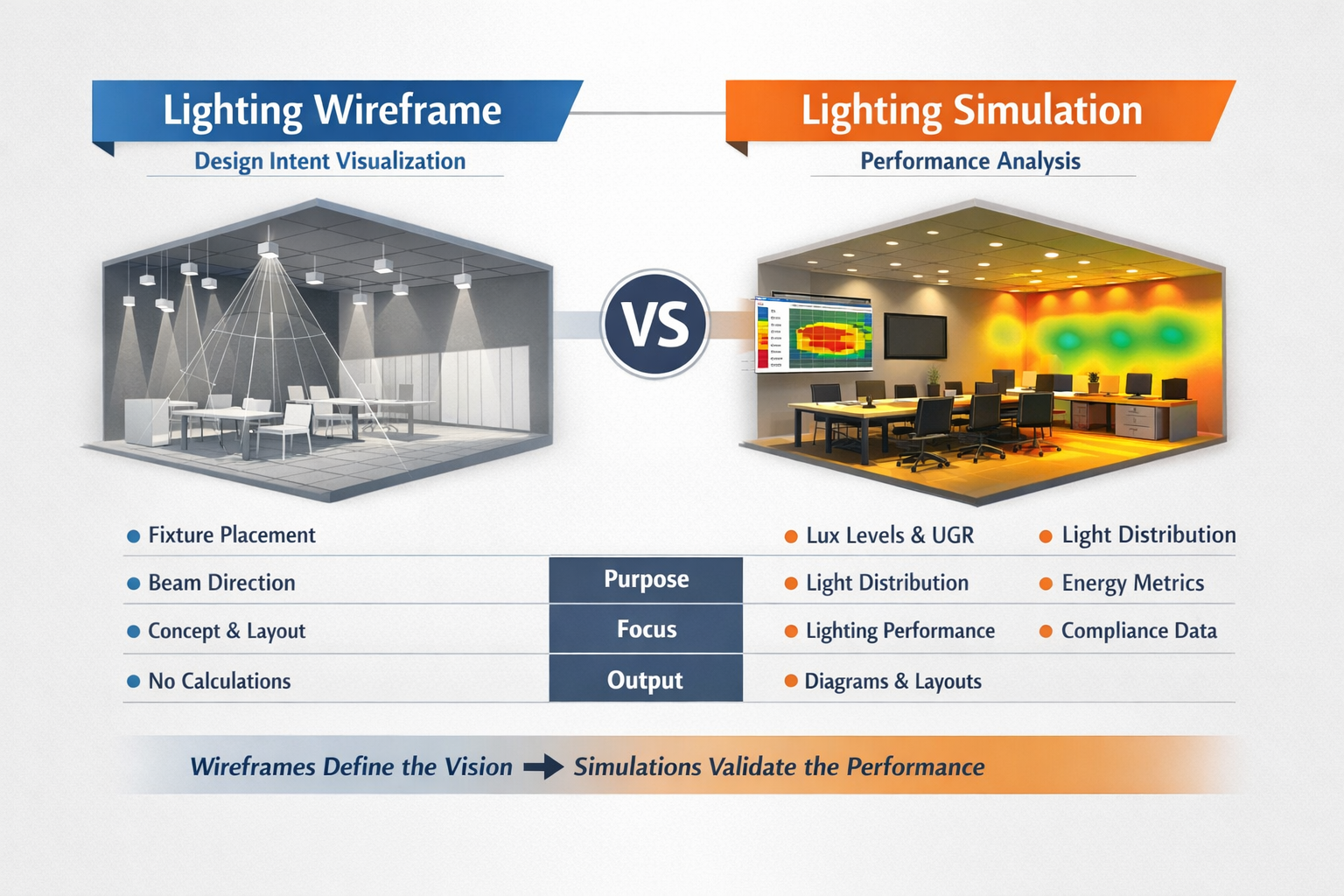
Key Differences at a Glance
How Early Lighting Wireframes Save Money
Delays and revisions cost more than just time — they impact the bottom line.
Early wireframes help:
Reduce construction change orders
Avoid late fixture upgrades or replacements
Lower electrical coordination costs
Prevent schedule extensions
Clients who adopt early lighting visualization often save between 5–15% of design and construction costs compared to traditional sequential workflows.
Early Lighting Wireframes showing fixture placement
Light becomes visible at the planning stage
Design decisions become data-backed
Execution becomes predictable and efficient
Workflow: Wireframe → Simulation → Execution
| Stage | Purpose | Outcome |
|---|---|---|
| Wireframe | Define lighting intent | Concept clarity |
| Simulation | Validate performance | Technical accuracy |
| Optimization | Refine design | Cost & energy efficiency |
| Execution | Install with confidence | Predictable results |
Integrating Lighting Wireframes in Your Workflow
Step 1: Concept Phase
-
Sketch primary light intentions
-
Identify key lighting zones
-
Review architectural intent
Step 2: Rough Lighting Wireframe
-
Place fixtures visually
-
Indicate approximate beam angles
-
Show power source and control basics
Step 3: Team Review
-
Share with architects & engineers
-
Resolve clashes early
-
Align on visual intent
Step 4: Refine for Construction
-
Add precise specifications
-
Integrate with electrical drawings
-
Coordinate with contractors
Conculsion
Early lighting wireframes play a critical role in reducing design revisions, preventing project delays, and improving overall coordination in architectural projects. By visualising lighting intent at the concept stage, design teams can align faster, resolve conflicts earlier, and move into execution with confidence. This proactive approach not only saves time and cost but also results in better-designed, performance-driven spaces.
Integrating lighting wireframes early transforms lighting from a last-minute adjustment into a strategic design advantage.
FAQs
A lighting wireframe is an early-stage visual plan that outlines fixture placement, beam direction, and lighting zones within a space. It helps define lighting intent before detailed calculations and construction drawings are prepared. This ensures clarity and alignment among all design stakeholders.
Early lighting wireframes clearly communicate lighting intent to architects, engineers, and clients. This reduces misunderstandings and avoids late-stage changes to layouts or fixtures. As a result, design revisions are minimized and the workflow becomes more efficient.
Yes, lighting wireframes allow for early coordination with electrical and MEP teams. Potential clashes and design conflicts are identified before construction begins. This proactive planning helps keep projects on schedule and avoids costly delays.
Lighting wireframes should be developed during the concept or schematic design stage. Creating them early allows lighting to integrate seamlessly with architecture and services. This leads to smoother execution and fewer changes later in the project.
Lighting wireframes act as a common visual reference for architects, lighting designers, and MEP consultants. They make it easier to align lighting layouts with structural and electrical systems early in the process. This reduces coordination issues and streamlines decision-making across teams.
Yes, lighting wireframes help clients clearly understand how lighting will function within a space. By visualising fixture placement and lighting intent early, clients can give informed feedback. This reduces approval delays and prevents late-stage design changes.
- All
- 3D Lighting Product Rendering
- Architectural Lighting Design
- Lighting Design
- Lighting Design Services
Why Choose UGR < 19 Lighting for Commercial Retail Spaces?
The Role of Lighting in Architecture
Lighting 3D Rendering & Animation Trends Shaping Product Marketing in 2026
From Concept to Certainty: The Role of Lighting Simulation
How Early Lighting Wireframes Reduce Design Revisions & Project Delays?