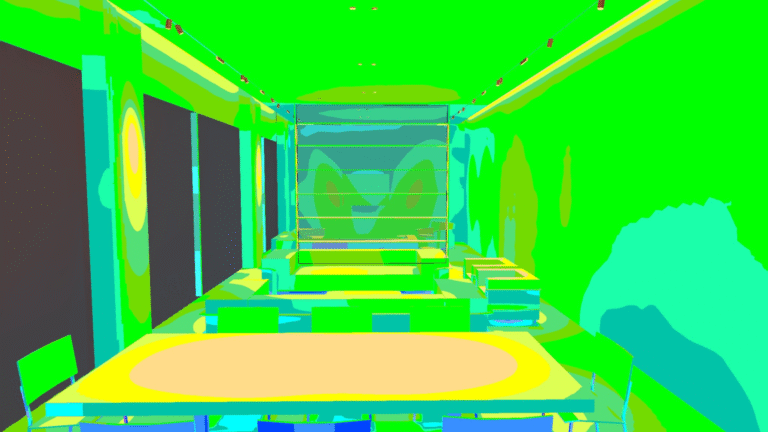
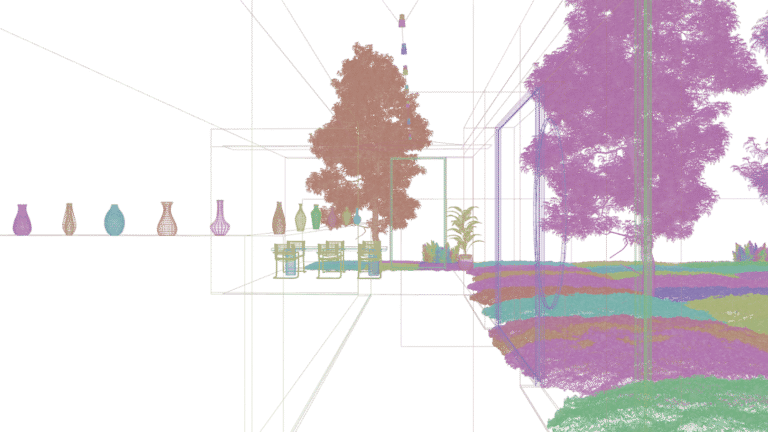
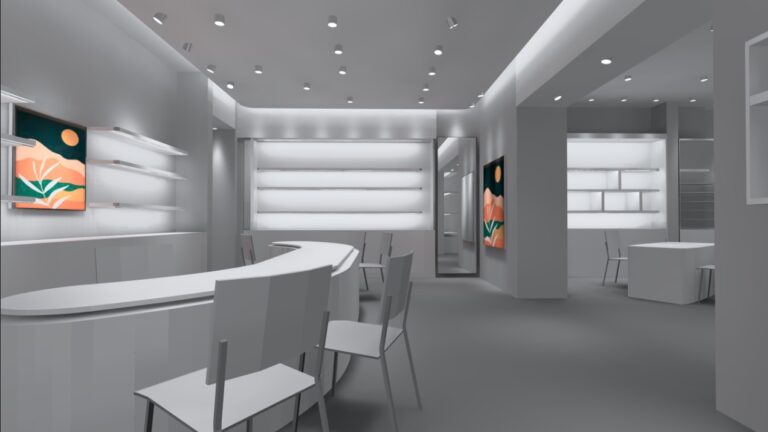
Lighting design begins with a vision—but delivering that vision accurately, efficiently, and compliantly requires more than experience alone. In today’s complex architectural and commercial projects, lighting simulation bridges the gap between design intent and measurable performance.
By validating lighting outcomes before execution, lighting simulation transforms early concepts into certainty, ensuring accuracy, compliance, and smoother project delivery.
What Is Lighting Simulation?
Lighting simulation is the digital analysis of how light behaves within a defined space using:
3D architectural models
Real-world photometric data (IES / LDT files)
Industry-standard calculation methods
It allows designers to predict and validate lighting performance before any physical installation takes place.
What Lighting Simulation Measures
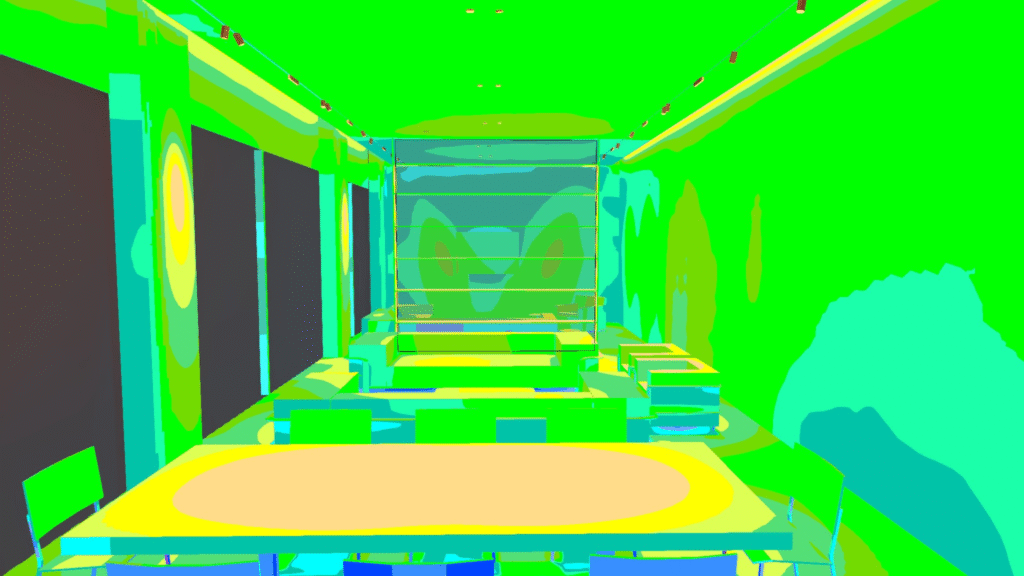
Lighting simulation evaluates key performance metrics such as:
Lighting Parameter
What It Tells You
Illuminance (Lux)
Whether the space meets required light levels
Uniformity Ratio
Consistency of lighting across surfaces
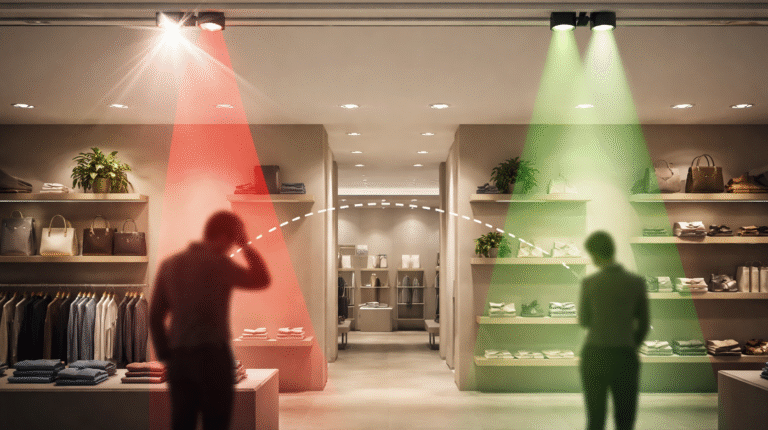
Glare (UGR)
Visual comfort and discomfort risk
Light Distribution
Beam spread and coverage
Contrast Levels
Visual clarity and hierarchy
Daylight Interaction
Balance between natural & artificial light
From Concept to Certainty: How Lighting Simulation Fits Each Design Stage
1. Concept Design Stage
At the early design phase, simulation helps:
Validate initial lighting intent
Compare multiple lighting concepts
Avoid over-design or under-lighting
Outcome: Confidence that the concept is technically viable.
2. Design Development Stage
As layouts evolve, lighting simulation enables:
Fixture selection optimization
Spacing and mounting height validation
Lux-level fine-tuning
Outcome: A refined, performance-driven lighting layout.
3. Compliance & Approval Stage
Simulation reports are often required for:
Consultant approvals
Authority submissions
Green building certifications
Outcome: Faster approvals with documented proof.
4. Pre-Execution Stage
Before procurement and installation:
Lighting quantities are confirmed
Design risks are minimized
Cost overruns are avoided
Outcome: Predictable execution and reduced rework.
Key Benefits of Lighting Simulation
✔ Accurate lux and uniformity calculations ✔ Reduced design revisions and site changes ✔ Improved visual comfort and glare control ✔ Optimized fixture count and cost ✔ Energy-efficient lighting strategies ✔ Faster client and authority approvals
Conculsion
Lighting simulation transforms lighting design from a conceptual idea into a verified, performance-driven solution. By validating lux levels, glare control, uniformity, and compliance early in the design process, it eliminates uncertainty and reduces project risk. From concept to certainty, lighting simulation empowers designers, consultants, and clients to make informed decisions, achieve faster approvals, and deliver lighting systems that perform exactly as intended. In modern projects, it is no longer an option—it is a necessity.
Lighting simulation is used to digitally analyze how light performs in a space before installation. It helps calculate accurate lux levels, assess uniformity, control glare, and validate overall lighting performance. This ensures the design meets both visual and technical requirements.
Lighting simulation removes guesswork from the design process by providing data-driven insights. It ensures accuracy, reduces design revisions, and confirms compliance with lighting standards. This leads to smoother approvals and predictable project outcomes.
Professional lighting simulation is typically performed using tools such as DIALux EVO, Relux, and AGi32. These platforms use real photometric data to deliver accurate lux calculations, glare analysis, and compliance-ready reports.
Yes, many commercial, retail, and industrial projects require lighting simulation reports for consultant and authority approvals. These reports demonstrate compliance with IES, EN, or project-specific lighting standards.
Lighting simulation should ideally be carried out during the concept and design development stages. Early simulation allows designers to optimize layouts, finalize fixtures, and avoid costly changes during execution.