
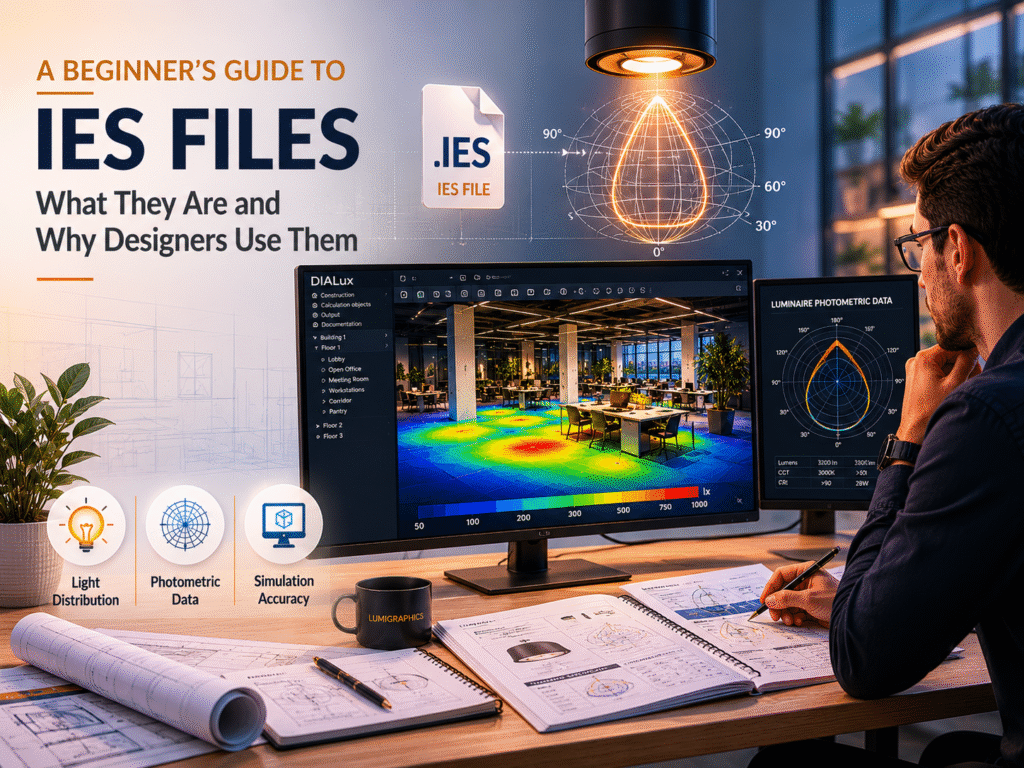
A Beginner’s Guide to IES Files: What They Are and Why Designers Use Them
If you have ever worked with a lighting designer or specified fixtures using simulation software, you have almost certainly encountered IES files. Yet for many architects, interior designers, and project managers, IES files remain a technical mystery. Understanding what IES files are and why they matter can help you have better conversations with your lighting team and make more informed specification decisions.
What Is an IES File?
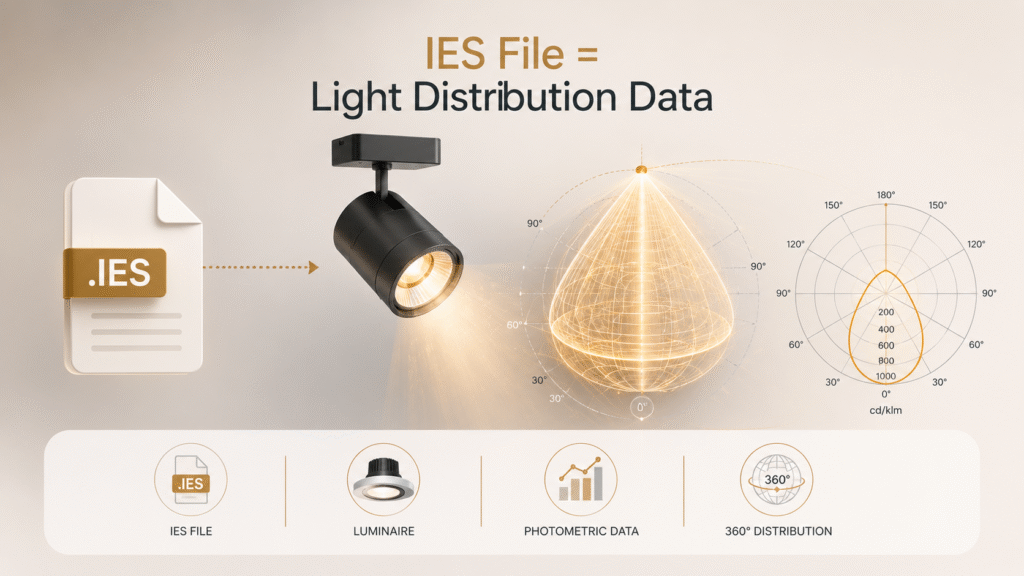
An IES file (Illuminating Engineering Society file format, extension .ies) is a standardised text file that contains the photometric data for a specific luminaire. In plain terms, it tells lighting simulation software exactly how a given fixture distributes light in three-dimensional space, how much light comes out in every direction, expressed in candelas. This data is measured in a photometric laboratory by the fixture manufacturer and provided as a downloadable file.
Why IES Files Matter for Lighting Simulation
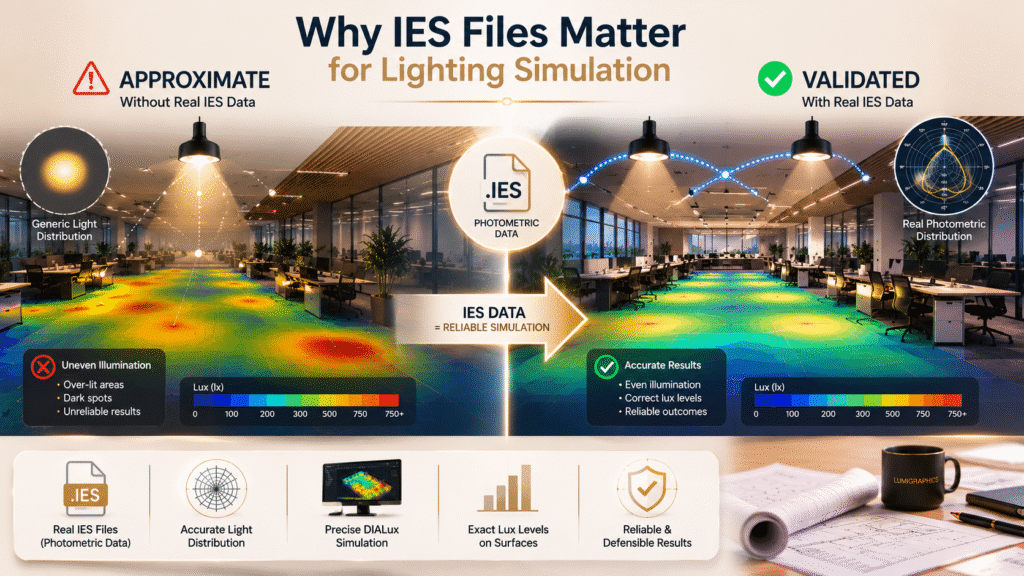
When Lumigraphics runs a DIALux simulation, we import the IES files for every fixture specified in the design. The software uses this photometric data to calculate exactly how the light from each fixture will spread across the space, how surfaces will be illuminated, and what lux levels will be achieved. Without real IES files, the simulation is an approximation, and simulations built on approximate data produce unreliable results.
How to Obtain IES Files
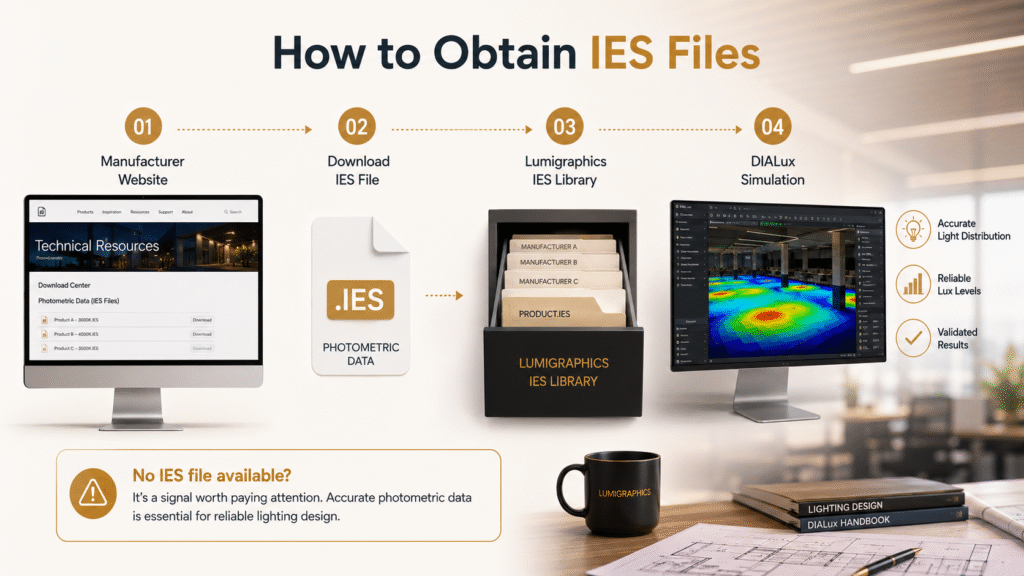
Most reputable lighting manufacturers provide IES files for their products, typically available to download from their website technical resource section. Lumigraphics maintains a library of IES files from key manufacturers and can source photometric data as part of every specification we produce. If a manufacturer cannot provide an IES file for a product, that is a signal worth paying attention to.
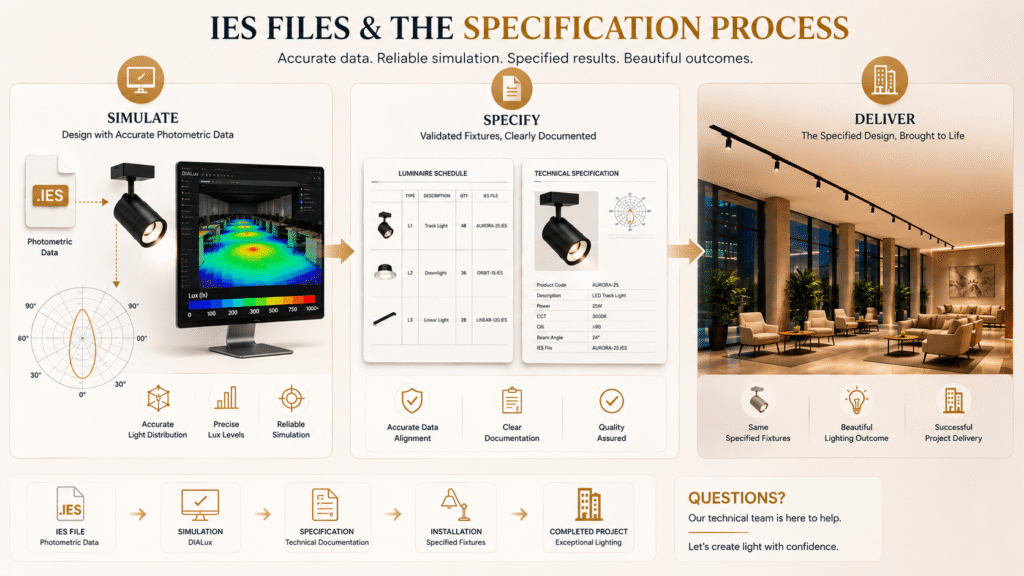
IES Files and the Specification Process
Using accurate IES files in the simulation phase means that when a project moves from design to procurement, the specified fixtures are exactly the ones that have been validated. This alignment between simulation and specification is one of the most important quality controls in professional lighting design, and it is a standard that Lumigraphics applies to every project we deliver.
Have questions about IES files or lighting simulation? The Lumigraphics technical team is happy to explain how we use photometric data in your project.