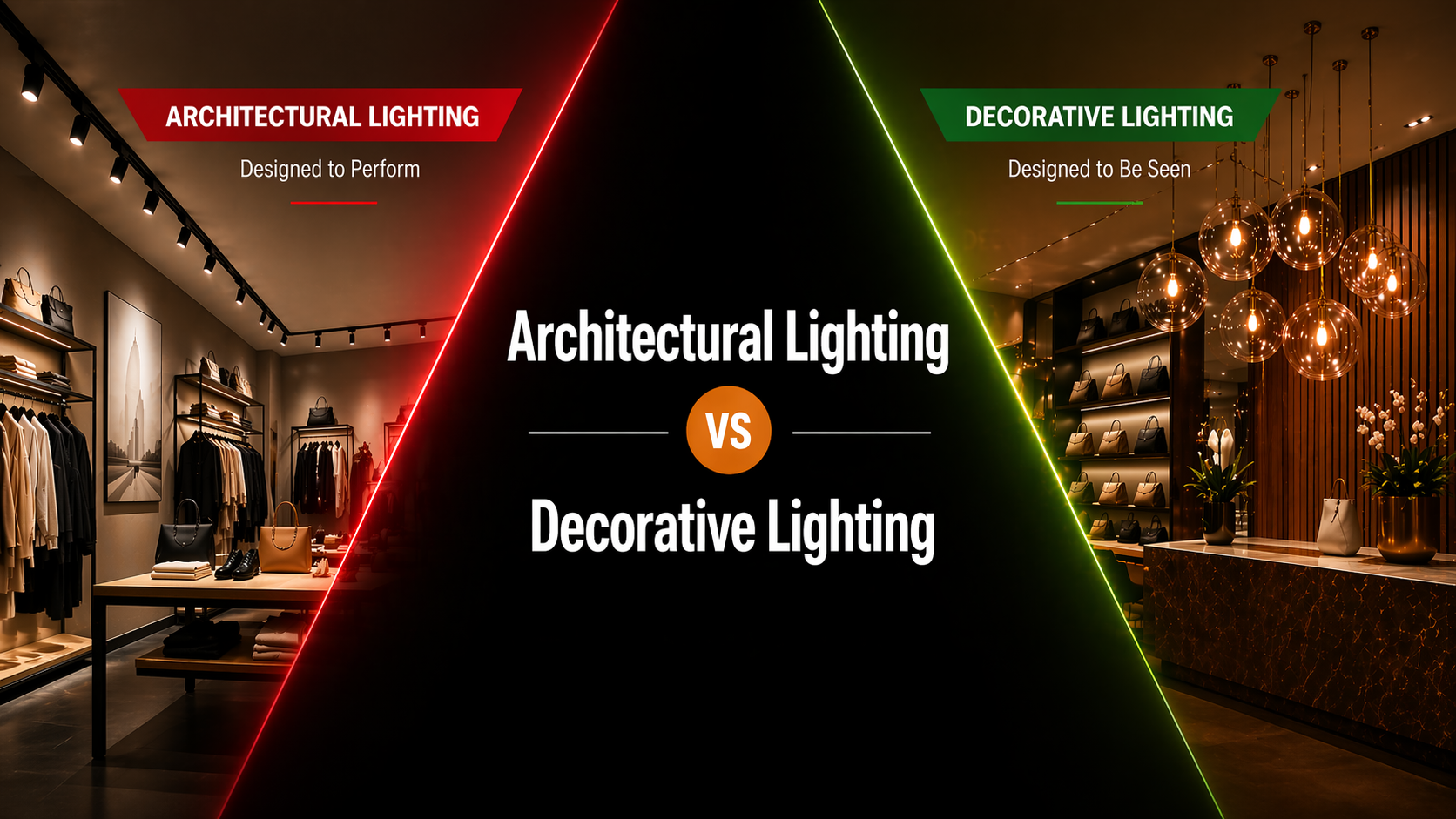
Architectural Lighting vs Decorative Lighting: What’s the Real Difference?
Discover how architectural lighting and decorative lighting work differently to shape visibility, mood, and design — and why both are essential for creating impactful spaces.
Architectural Lighting vs Decorative Lighting
Introduction
In today’s design-driven spaces, lighting is no longer just about illumination — it’s about experience. Whether it’s a retail showroom, a hotel lobby, or even a modern home, lighting directly influences how people see, feel, and interact with a space.
Two key lighting approaches define this experience:
Architectural Lighting
Decorative Lighting
While they often coexist in the same project, their purpose and impact are completely different.
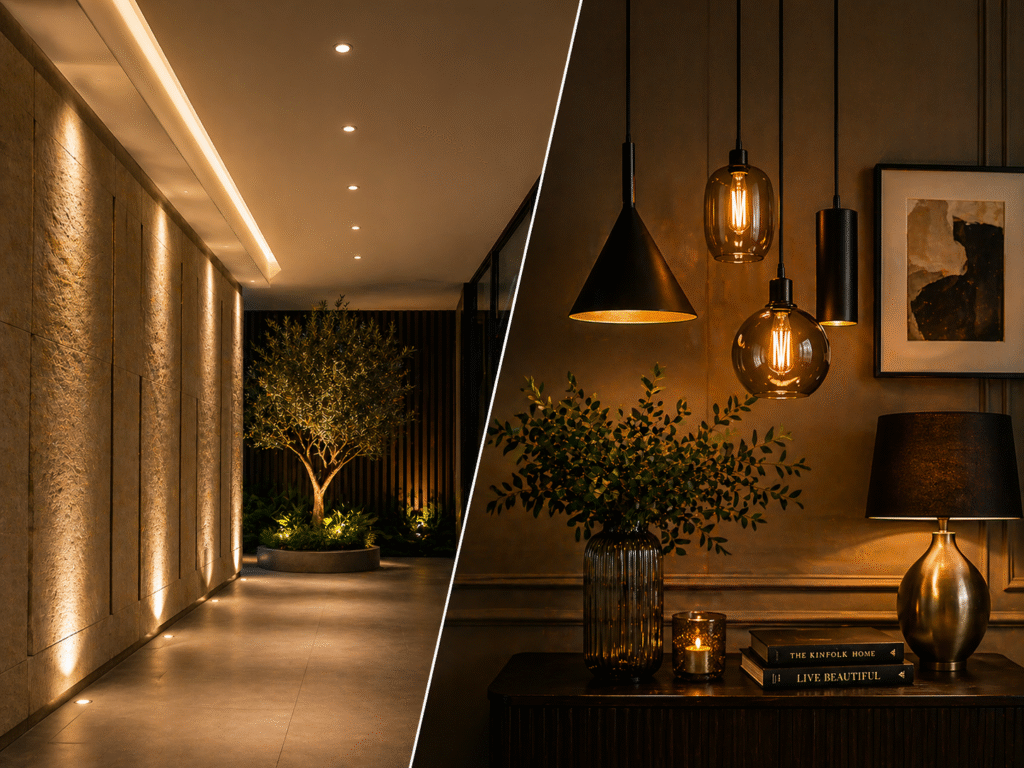
It is designed to integrate seamlessly into the structure of a space — often hidden within ceilings, walls, or fixtures — so that the focus remains on what is being illuminated, not the light source itself.
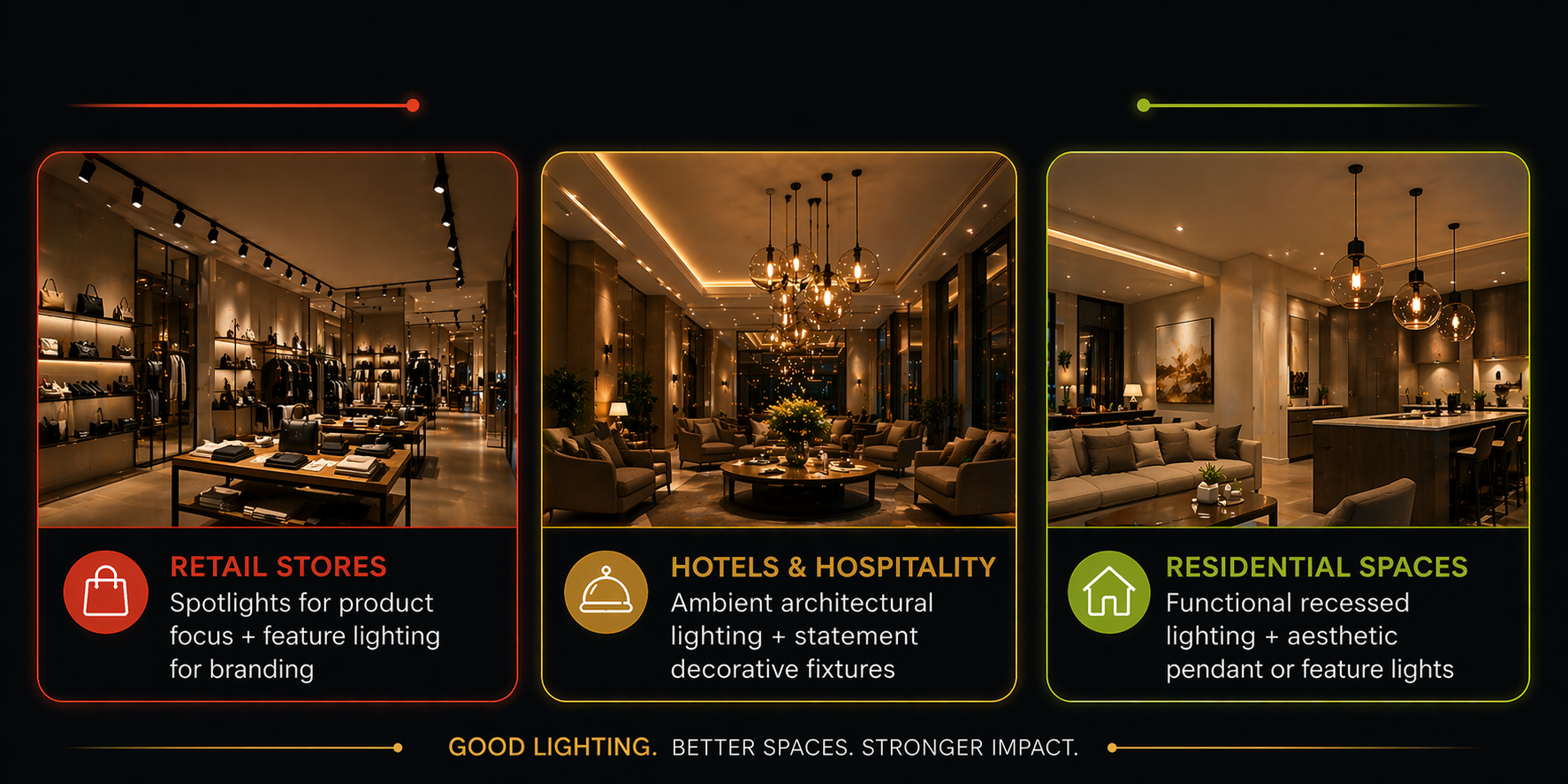
In retail environments, this type of lighting plays a critical role. A well-placed spotlight with the right beam angle can instantly elevate how a product looks, making it appear more premium and desirable.
Key Characteristics:
Integrated into architecture (recessed, track, linear)
Unlike architectural lighting, this is meant to be seen. It adds personality, creates mood, and often acts as a visual centerpiece within a space.
Think of a chandelier in a hotel lobby or pendant lights in a café — they don’t just light the space, they define it.
Key Characteristics:
Visually prominent and expressive
Enhances mood and atmosphere
Acts as a focal point
Wide range of styles and designs
Comparison Overview
Aspect
Architectural Lighting
Decorative Lighting
Purpose
Function & visibility
Aesthetics & mood
Focus
Light effect
Fixture design
Placement
Integrated/hidden
Visible/featured
Role
Highlights space/products
Enhances identity
Example
Spotlights, linear lights
Chandeliers, pendants
Why Both Matter Together
The best-designed spaces don’t rely on just one type of lighting — they use both.
A space with only decorative lighting may look attractive but lack proper visibility. On the other hand, a space with only architectural lighting can feel too flat or overly technical.
When used together:
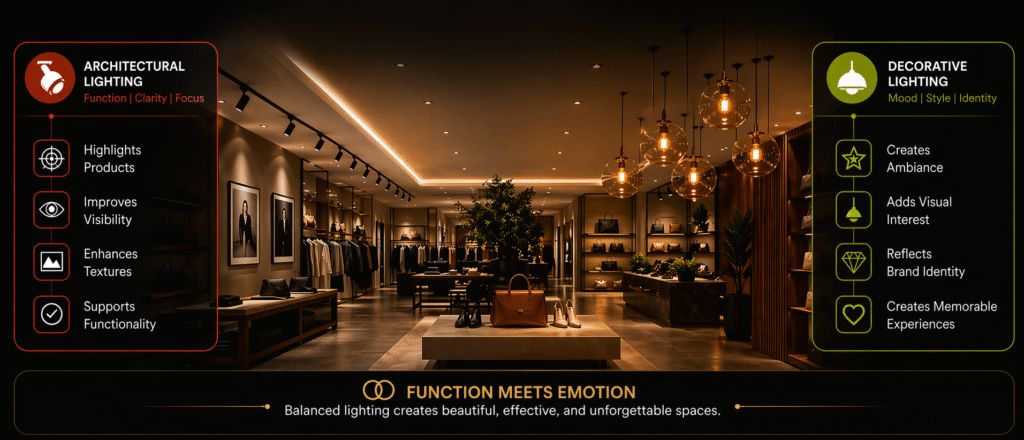
Architectural lighting provides clarity and focus
Decorative lighting adds emotion and character
This combination creates a balanced and complete lighting experience.
Architectural lighting focuses on functionality — it helps illuminate spaces, highlight products, and improve visibility. Decorative lighting, on the other hand, is more about aesthetics, adding style, mood, and visual appeal to a space.
Yes, and they should be. The best lighting designs combine both — architectural lighting for clarity and performance, and decorative lighting for atmosphere and design impact.
Both are equally important. Architectural lighting ensures products are clearly visible and well-presented, while decorative lighting enhances the overall shopping experience and brand perception.
Architectural lighting is commonly used in ceilings, walls, and display areas — such as recessed lights, track lighting, and linear lighting systems in retail stores, museums, and offices.
Decorative lighting includes chandeliers, pendant lights, wall sconces, and designer fixtures that act as focal points and enhance the visual appeal of a space.
Start by understanding the purpose of your space. Use architectural lighting for functionality and visibility, then layer it with decorative lighting to add mood, character, and a strong design identity.
Conclusion
Lighting is not just about illuminating a space — it’s about shaping how that space is experienced.
Architectural lighting brings precision, clarity, and purpose. It ensures that spaces function efficiently and that products or elements are presented in the best possible way. Decorative lighting, on the other hand, adds emotion, character, and visual identity, making a space more engaging and memorable.
Individually, each has its role. But together, they create balance.
A well-designed space doesn’t rely on just one — it layers both to achieve functionality and aesthetics in harmony. This combination is what transforms an ordinary environment into a refined and impactful experience.
In modern design, the goal is not to choose between architectural and decorative lighting, but to use both thoughtfully — creating spaces that are not only well-lit, but well-designed.
Lighting is not just about visibility, it is about creating an experience.